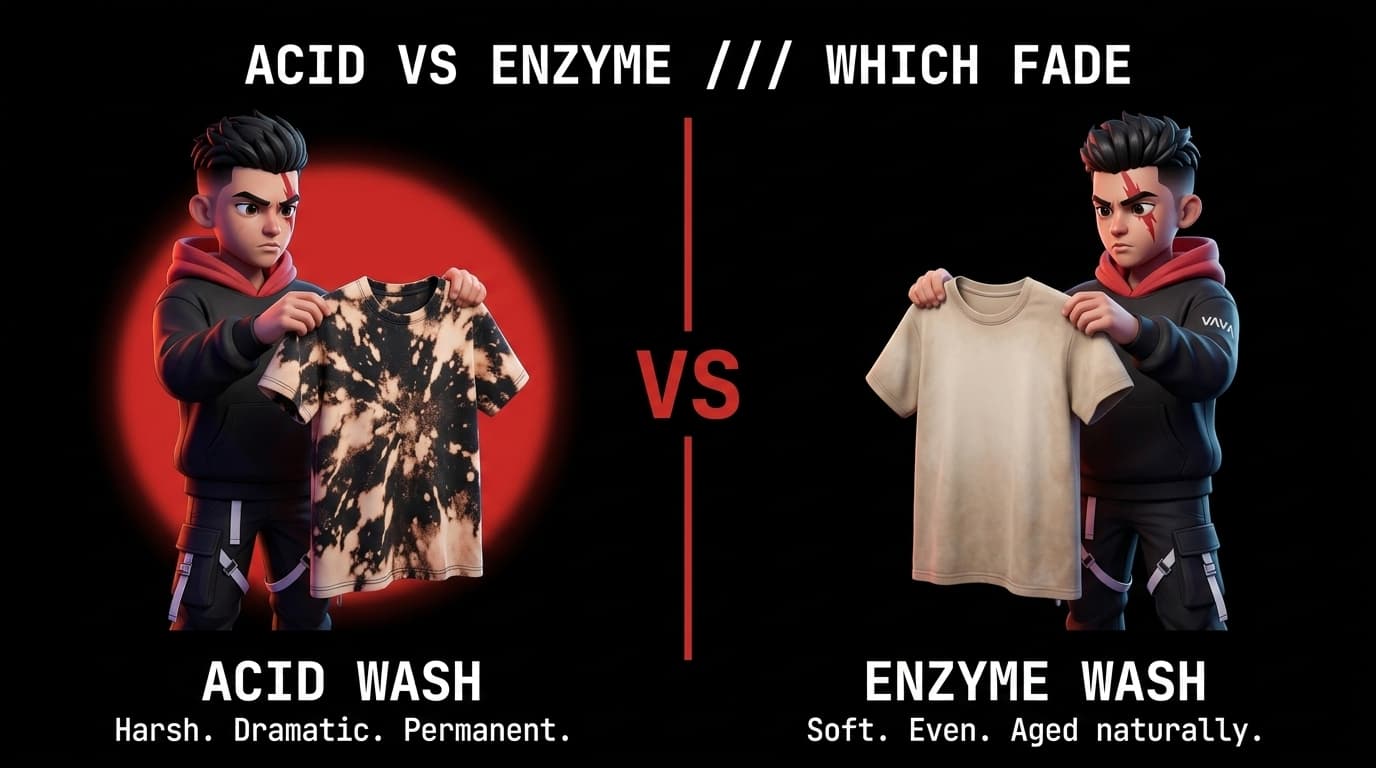
Acid-Wash vs. Enzyme-Wash: Choosing the Right Faded Patina for Heavy Tees
Choosing between acid-wash and enzyme-wash processes determines the high-contrast texture, seam highlights, and surface softness of your vintage-style streetwear tees. While acid-wash utilizes pumice stones and chemicals to create a bold, high-contrast weathered look, enzyme-wash relies on bio-enzymes to gently fade the color while smoothing surface fuzz.
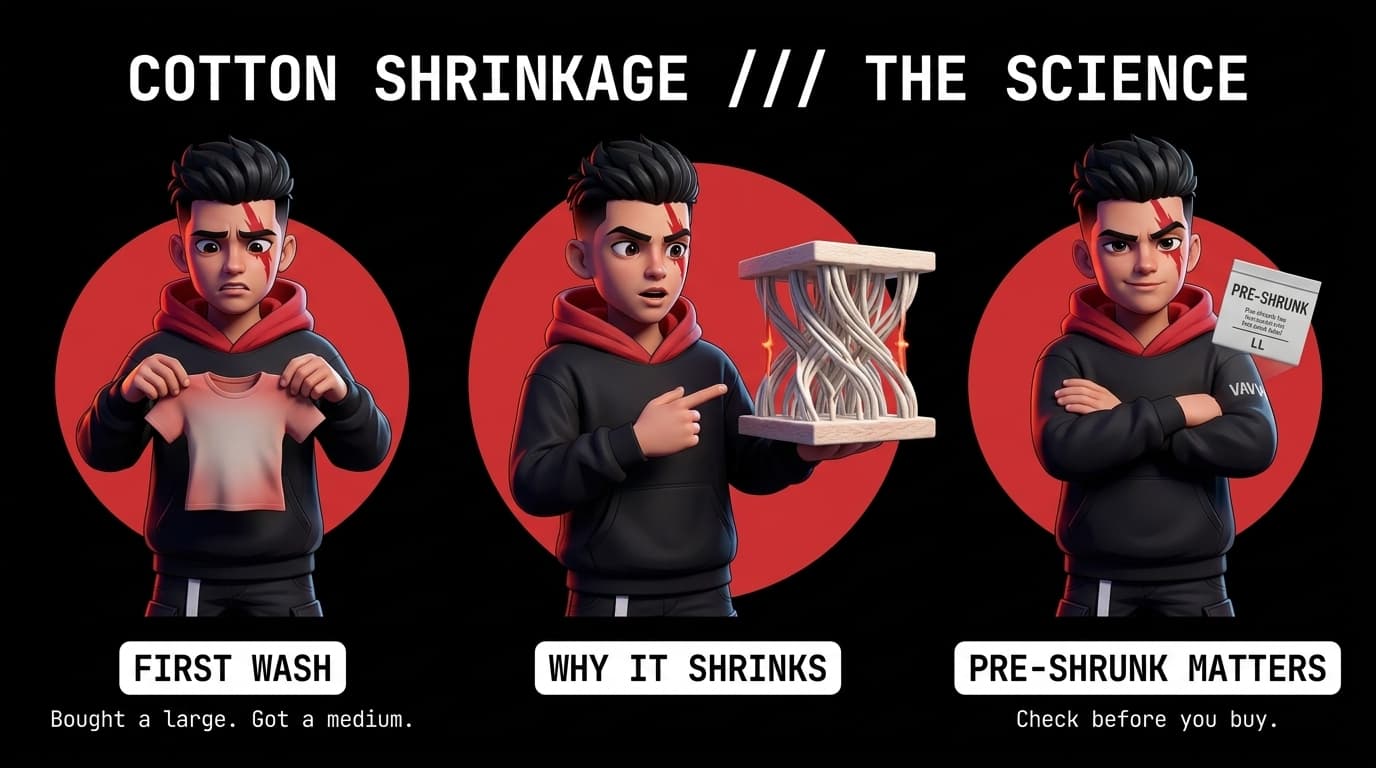
The Science of Pre-Shrinking Cotton Fabrics: Bypassing the Wash Shrinkage Trap
Understanding the science of pre-shrinking cotton fabrics is essential to prevent your premium streetwear tees and hoodies from losing their boxy fits in the wash. By choosing garments made from pre-shrunk combed cotton and washing them in cold water, you can easily maintain their design proportions forever.
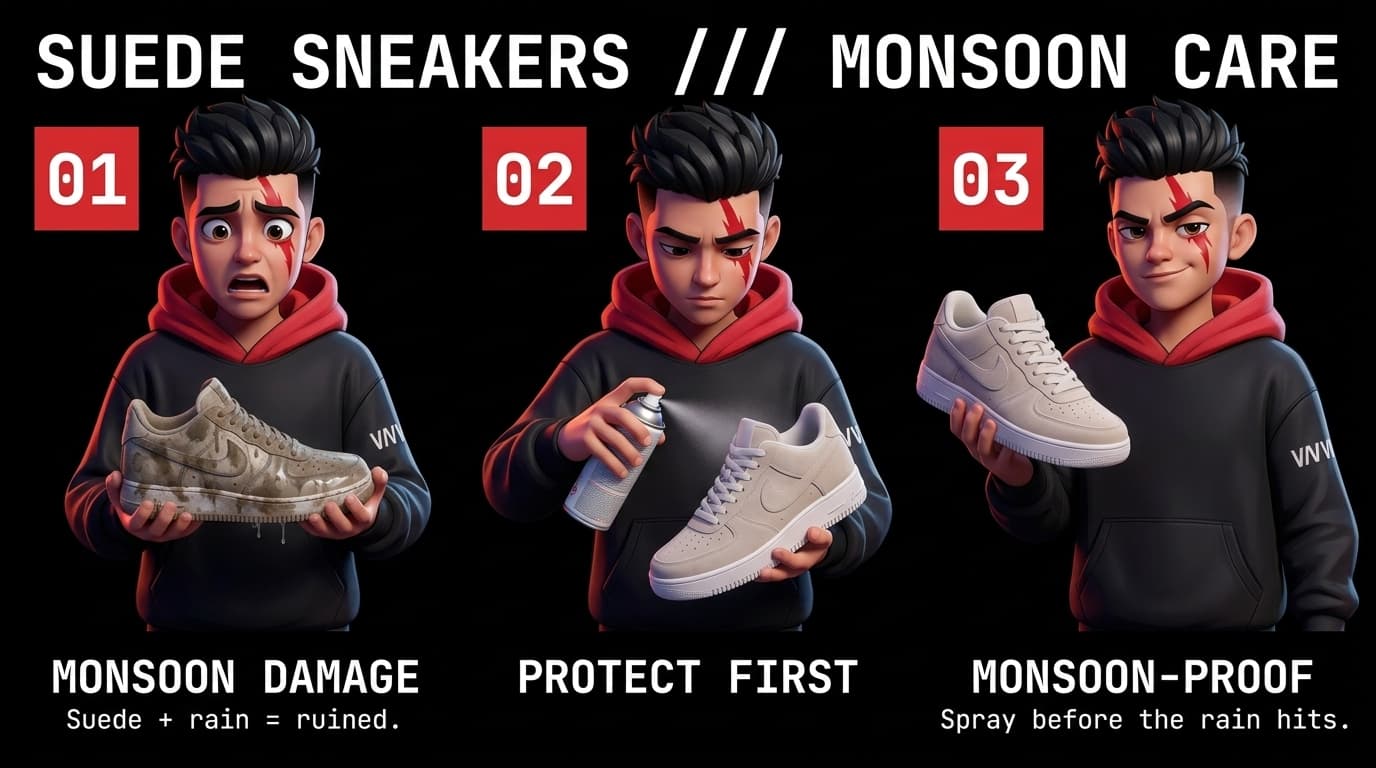
How to Care for Suede and Nubuck Sneakers during Indian Monsoons
Caring for suede and nubuck sneakers during the intense Indian monsoon season requires proactive water repelling, quick-dry ventilation, and gentle mechanical stain removal. Since natural napped leather absorbs moisture like a sponge, keeping them dry is the only way to prevent permanent color bleeding and mold growth.
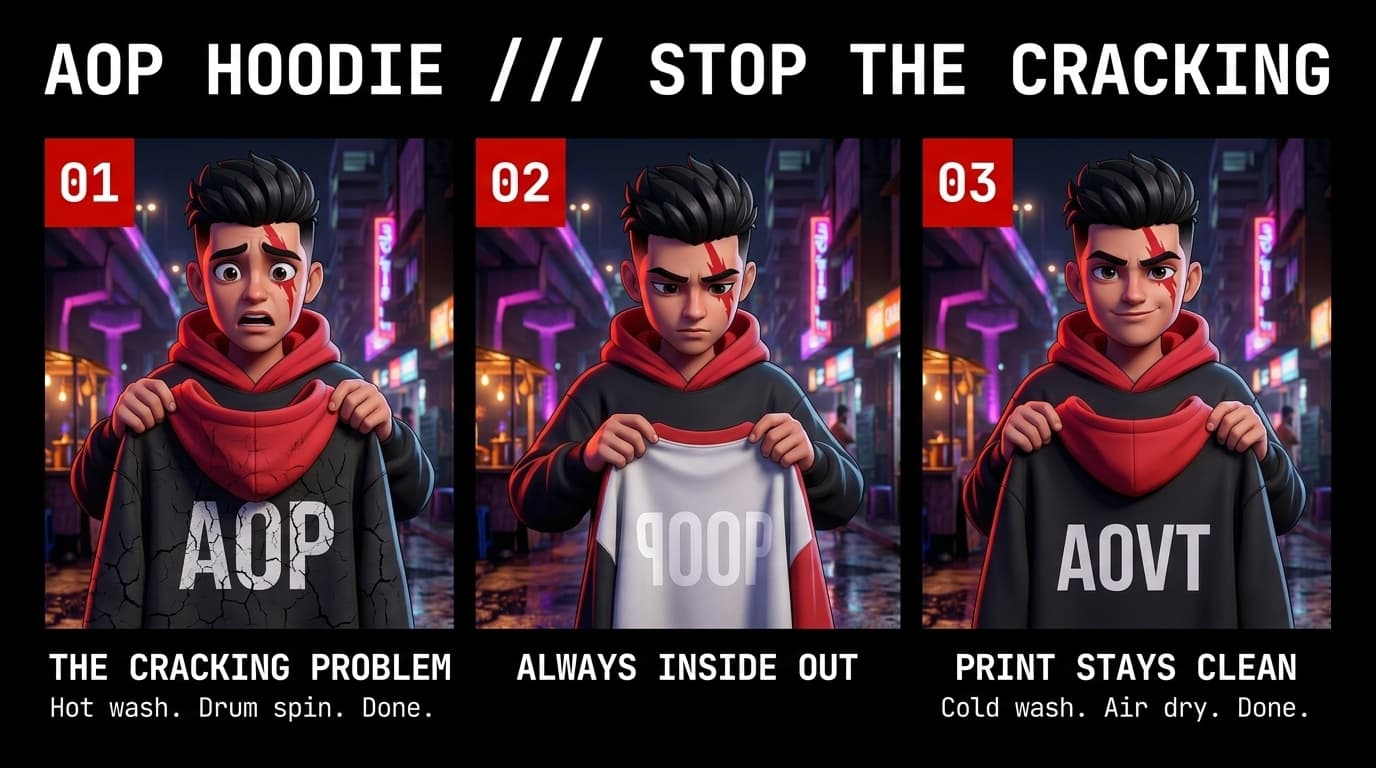
5 Essential Wash Steps to Stop All-Over-Print (AOP) Hoodie Cracking
Applying the correct wash steps to stop All-Over-Print (AOP) hoodies from cracking is essential to preserve the graphic's flexibility and keep colors rich. By managing wash friction, temperature, and drying tension, you can easily maintain a completely smooth, crack-free, and premium print face forever.

French Terry vs. Fleece Hoodies: Which is Better for Indian Winters?
Choosing between unbrushed cotton French Terry and polyester-brushed fleece determines the breathability, visual drape, and skin comfort of your winter streetwear hoodies. While French Terry utilizes natural cotton loops to provide a heavy, highly breathable drape ideal for shifting Indian winter metros, fleece features a brushed interior that traps intense heat at a cheaper price point.
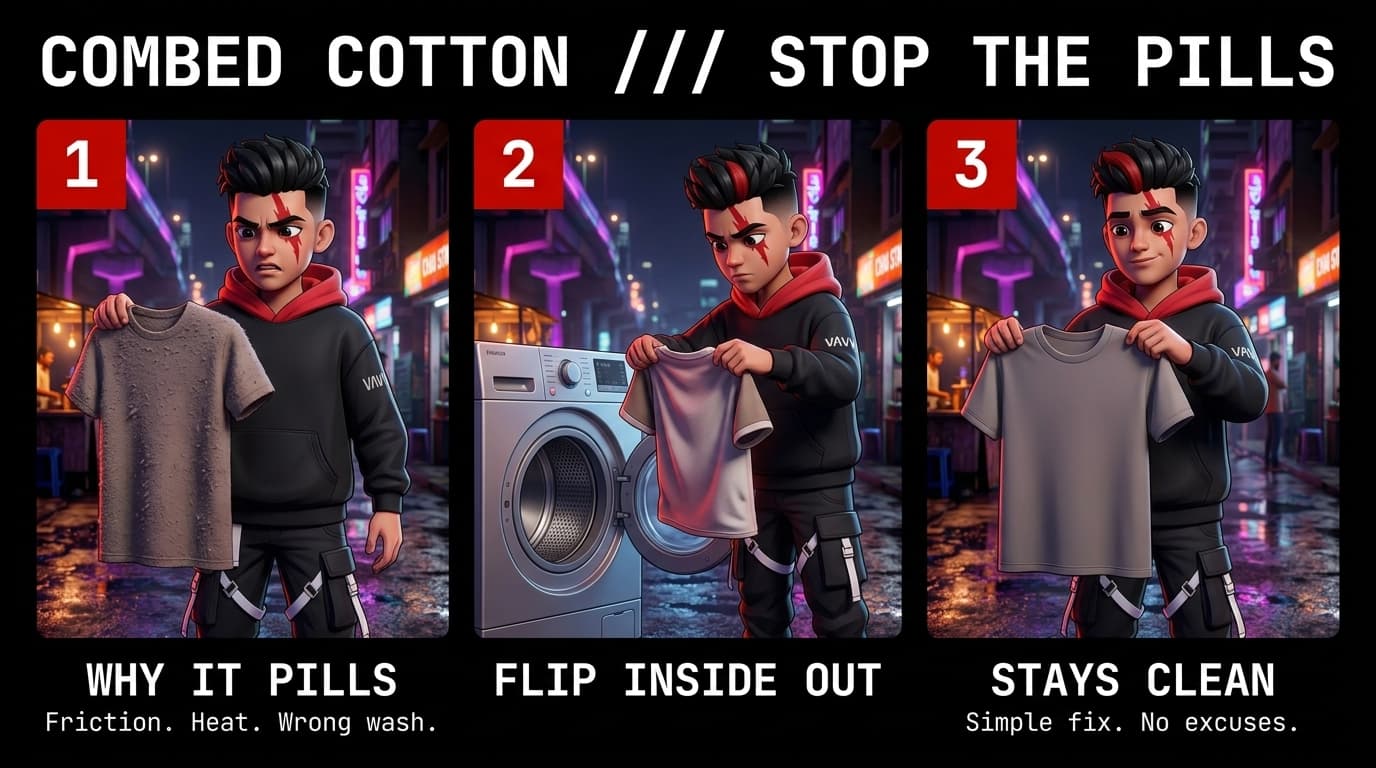
4 Essential Steps to Stop Combed Cotton T-Shirts from Pilling
Stopping combed cotton t-shirts from pilling requires managing wash friction, heat exposure, and detergent chemistry to protect the long-staple cotton bonds. By adopting cold-water gentle cycles, liquid detergents, and shade-drying protocols, you can easily maintain a completely smooth, premium fabric face forever.
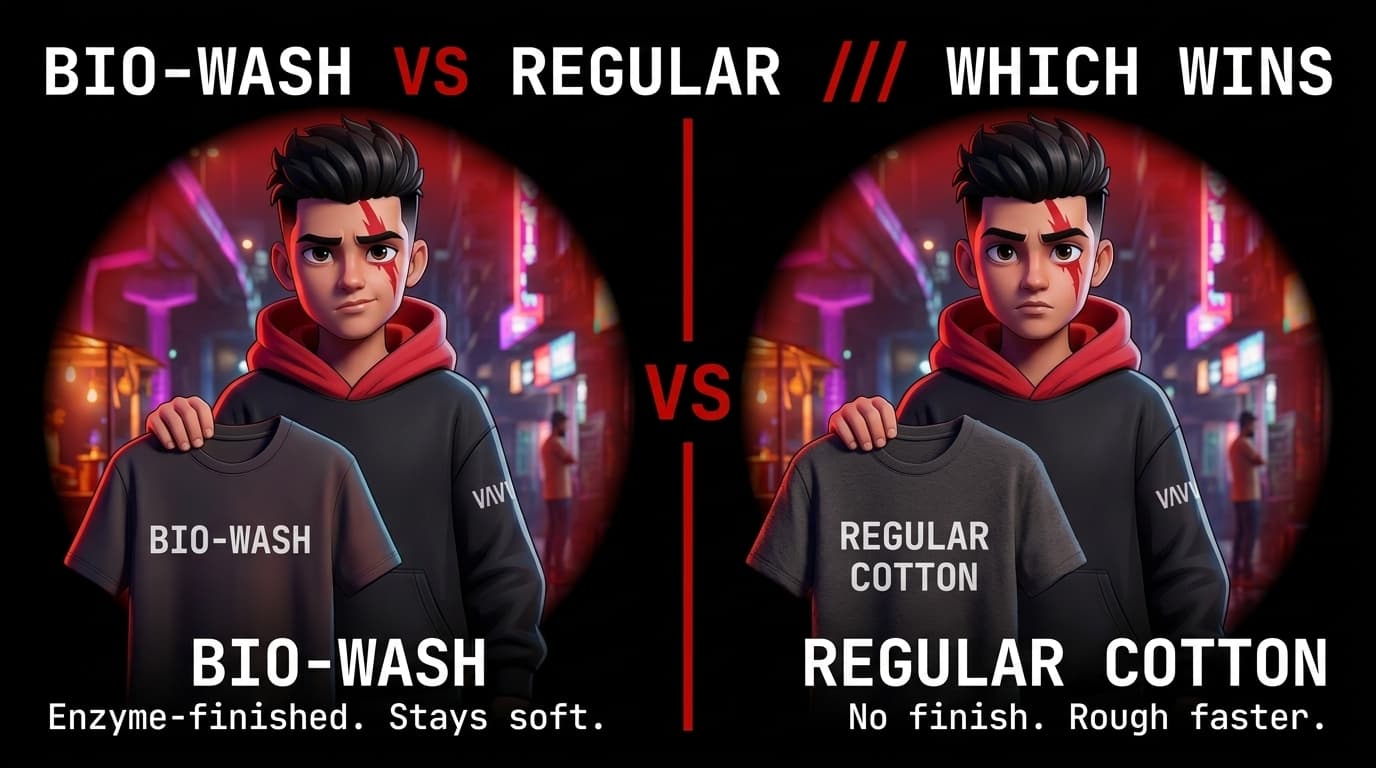
Bio-Wash vs. Regular Cotton: Which Streetwear T-Shirt Lasts Longer?
The choice between premium bio-washed combed cotton and regular cotton determines the softness, print adherence, and physical lifespan of your streetwear t-shirts. While bio-washing utilizes organic enzymes to polish surface fuzz and create an incredibly smooth finish, regular cotton preserves all its natural fiber thickness, offering slightly more raw stiffness.

5 Common Detergent Mistakes That Ruin Heavyweight French Terry Hoodies
Avoiding common detergent mistakes when washing heavyweight French Terry hoodies is essential to protect the fabric's soft loop pile and prevent permanent shape warping. By rejecting aggressive powder abrasives, bleach additives, and chemical softeners, you can preserve the thick physical drape and clean color of your hoodies forever.
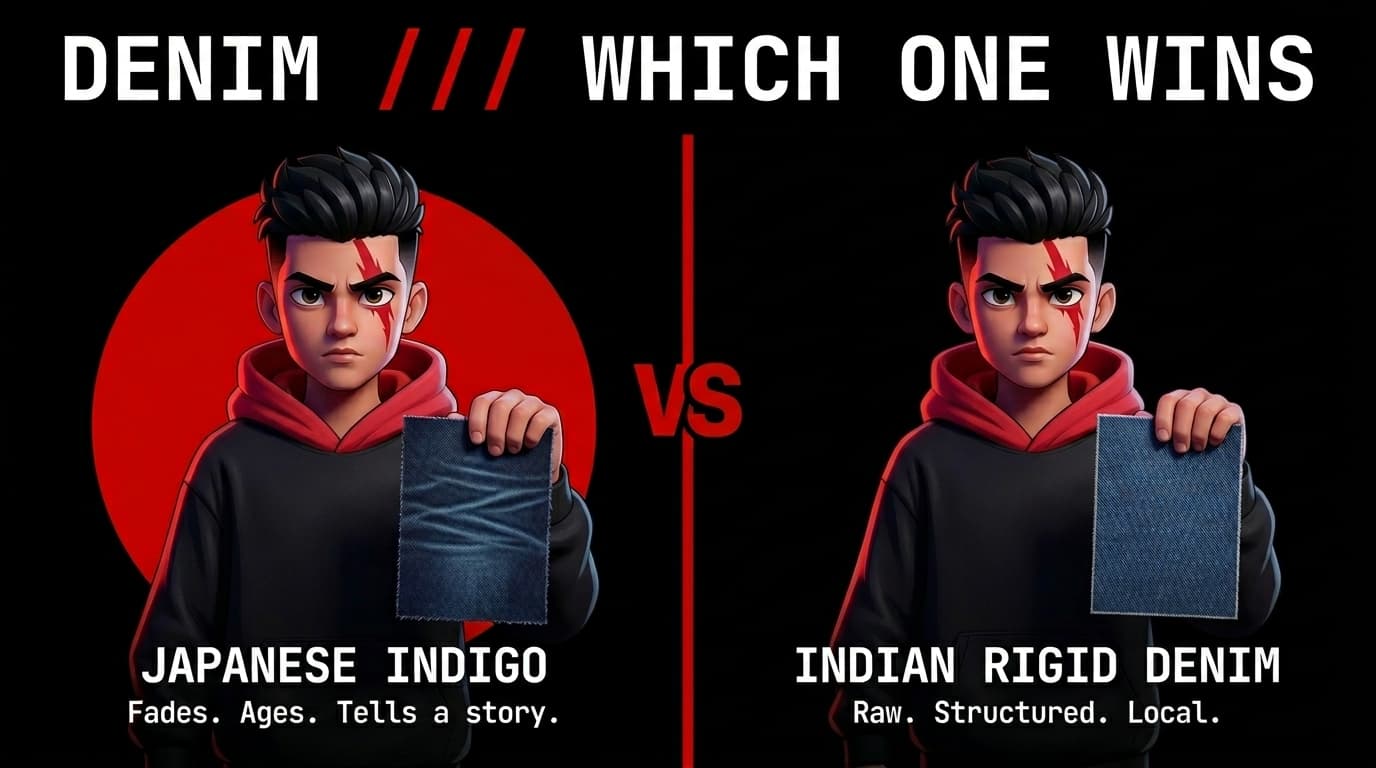
Japanese Indigo Raw Denim vs. Indian Rigid Denim: Is the Premium Worth It?
The choice between ultra-premium Japanese indigo raw denim and high-performance Indian rigid denim determines the entry barrier, fade potential, and fabric character of your streetwear wardrobe. While Japanese selvedge denim is celebrated for its slow shuttle-loom texture and deep natural indigo dye, Indian rigid denim offers massive structural stiffness and durability at a fraction of the cost.

The Evolution of the Mock-Neck Tee: The High-Collar Streetwear Layer
The mock-neck t-shirt represents the ultimate evolution of streetwear basics, celebrated for its 1.2–1.5 inch high-collar structure that frames the face and neck cleanly. Unlike standard low-collar crewnecks, the mock-neck adds instant architectural layering under open technical windbreakers, utility vests, or oversized hoodies.
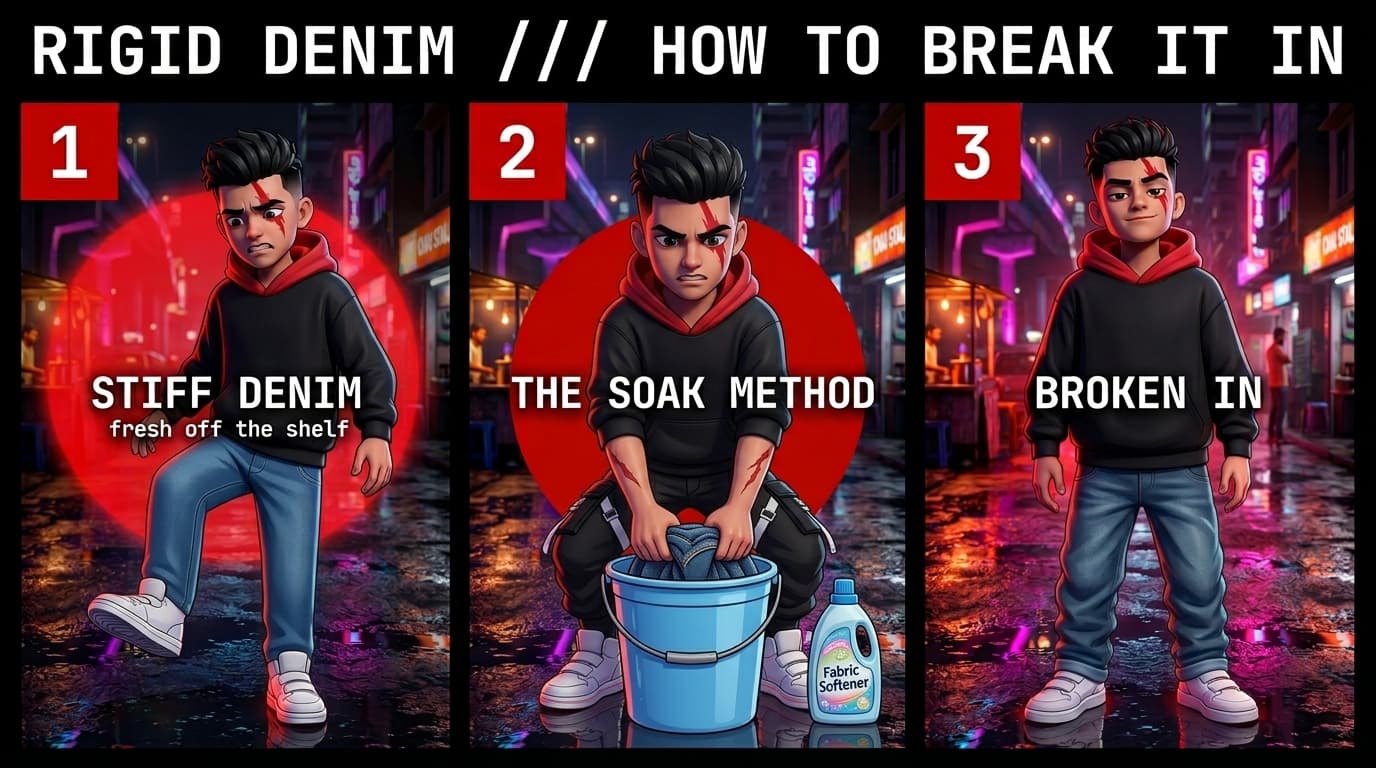
How to Soften Rigid Streetwear Denim: Safe Break-In Protocols
Softening rigid raw denim and heavy-canvas streetwear cargo pants requires patient physical break-in and gentle, heat-free softening protocols that preserve the fabric's structured drape and deep color. By opting for mechanical wear, cold water washes, and natural softening additives like white vinegar, you can break the fabric's initial stiffness without ruining its geometry.
/// VAVVY
Shop Now
Premium Indian streetwear, built for the heat.