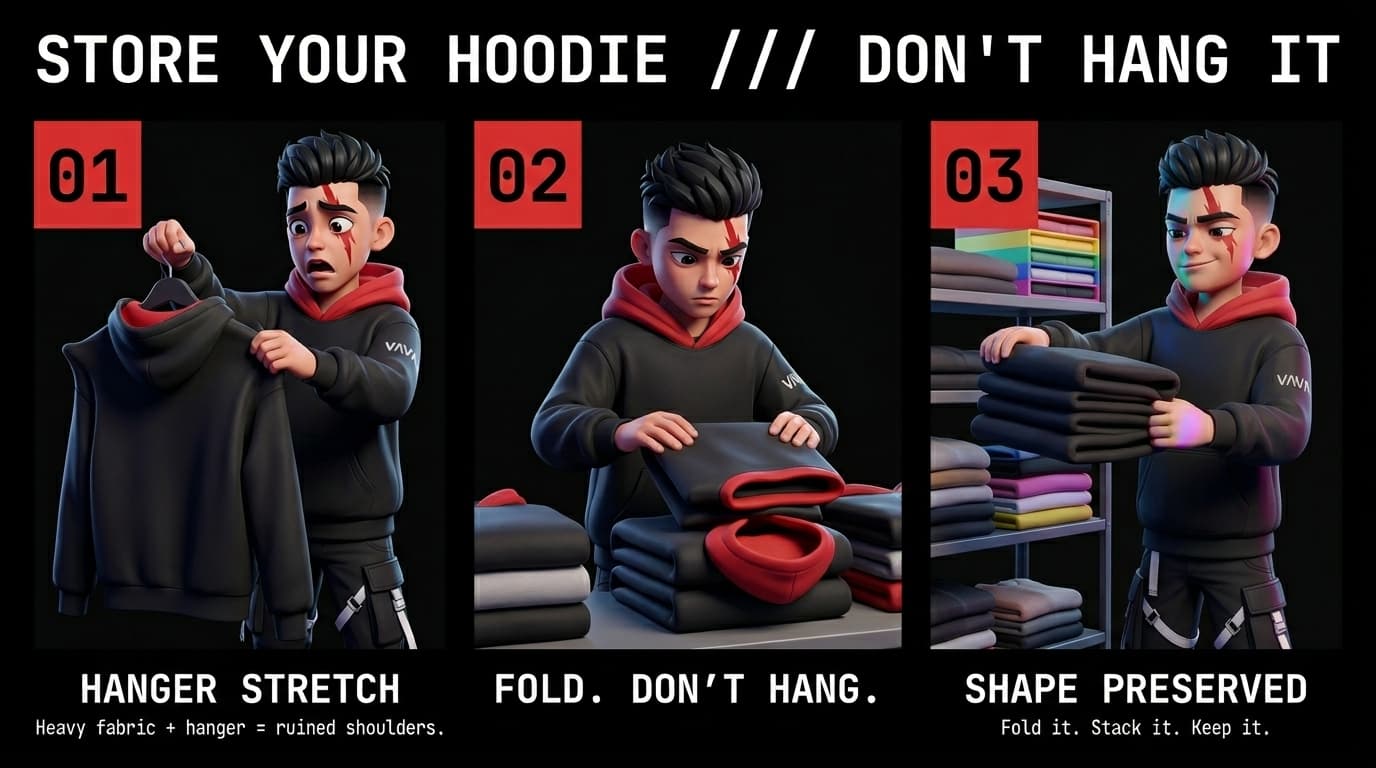
How to Store Heavyweight Hoodies: Preventing Hanger Bump Stretch
Storing heavyweight hoodies (350+ GSM) requires folding them flat or using specialized rolling methods rather than hanging them on thin wire or plastic hangers. The heavy weight of the thick French Terry or fleece fabric pulling down on a narrow hanger will permanently stretch the shoulder seams, leaving unsightly, pointy "hanger bumps" that ruin the garment's boxy drape.
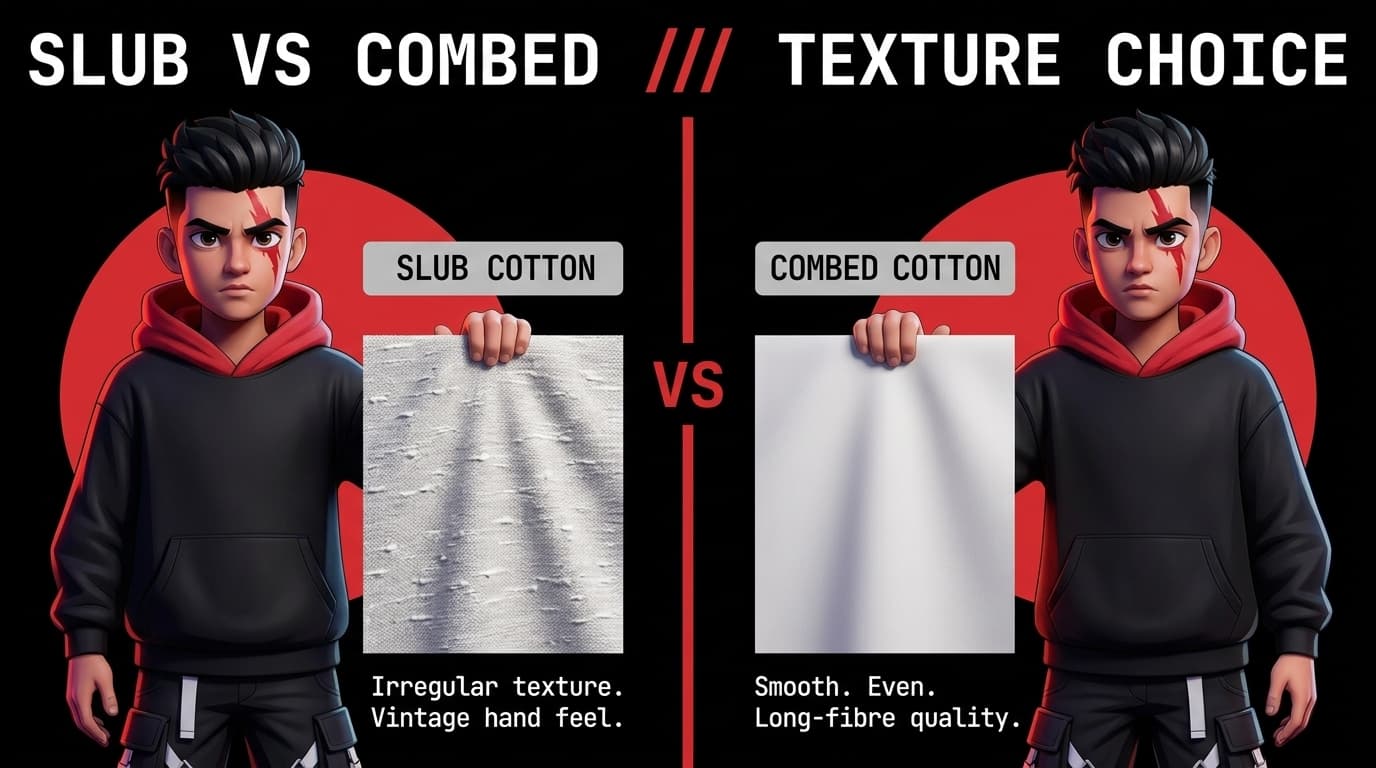
Slub Cotton vs Combed Cotton: Textures and Drape in Heavyweight Tees
Slub cotton features a bumpy, irregular texture with visible horizontal lines created by spinning yarn with varying thicknesses, whereas combed cotton is processed to remove short fibers and align the rest, producing a completely smooth, uniform fabric face. Slub cotton is ideal for organic, distressed looks, while combed cotton is best for sharp graphic prints and clean finishes.
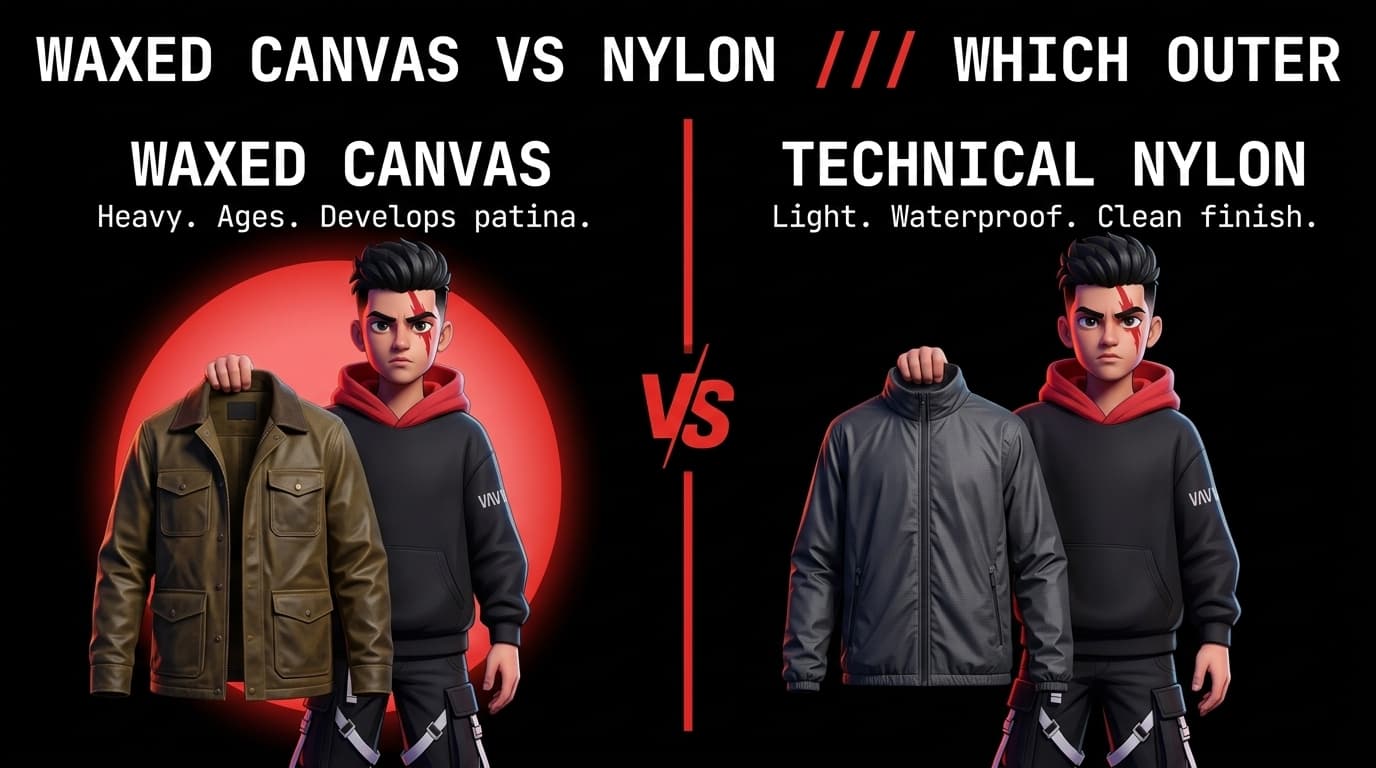
Waxed Canvas vs Technical Nylon: Weatherproofing in Urban Outerwear
Waxed canvas relies on a paraffin or beeswax coating on dense cotton weave to repel water and develop a rich patina over time, while technical nylon uses synthetic polymers and synthetic coatings (like DWR or polyurethane) for lightweight, high-performance waterproof protection. Choosing between them depends on whether you prefer heavy, heritage-inspired durability or lightweight, active-use water resistance.
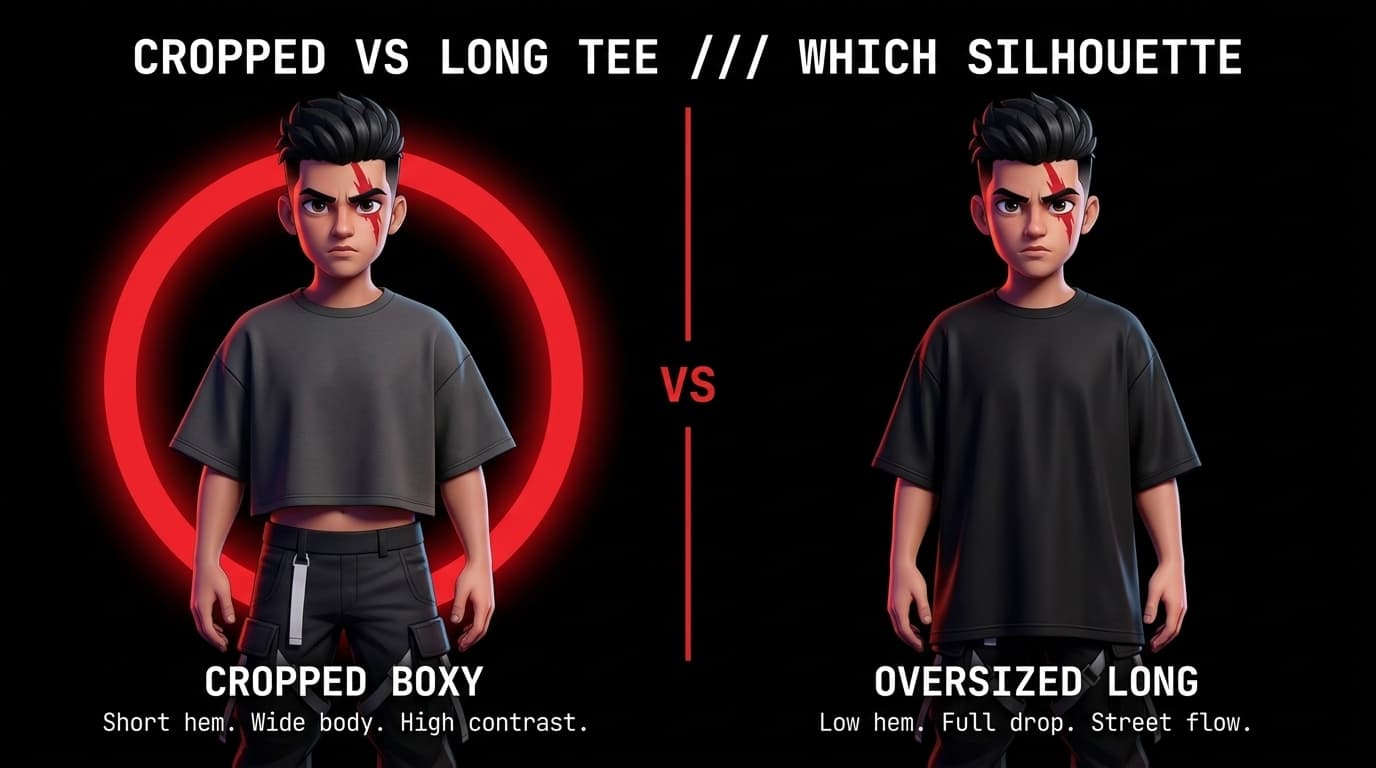
Cropped-Boxy vs Oversized-Long Tees: Managing Torso Proportions and Bottom Cuts
Choosing between cropped-boxy and oversized-long t-shirts determines whether your streetwear fits emphasize a high waistline with long leg drapes or a relaxed, elongated torso silhouette. Cropped-boxy tees cut off right at the waist to highlight cargo belt lines, while oversized-long tees drape past the hips, making them ideal for layering under vests.
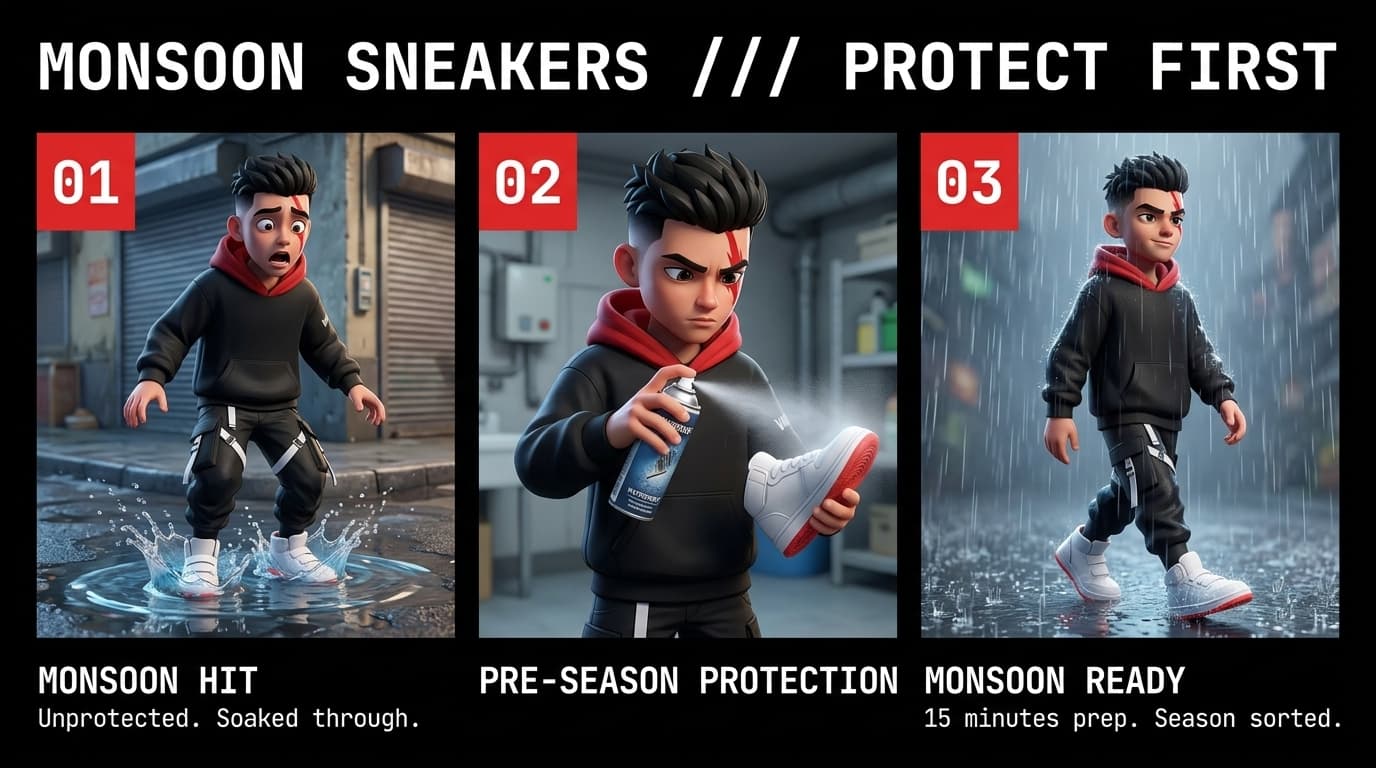
Monsoon Footwear Survival: Caring for Waterproof Sneakers and Gorpcore Boots
Surviving flooded metropolitan streets during Indian monsoons requires utilizing technical waterproof trail runners or rubber utility boots finished with hydrophobic sprays. Properly ventilating wet footwear and wiping down mud deposits immediately is the only way to prevent fungal odors and sole delamination.
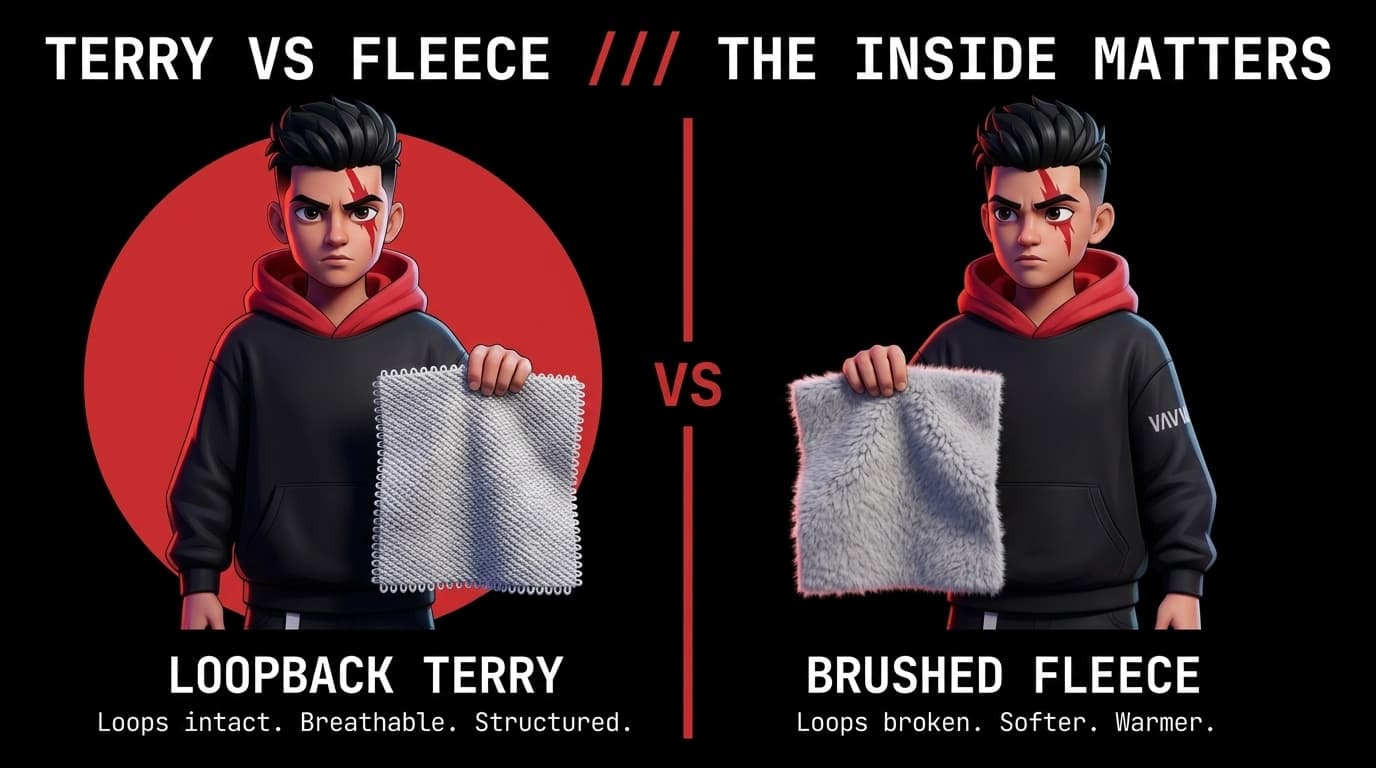
Loopback French Terry vs Brushed Fleece: Wash Stability, Warmth, and Loft Longevity
Choosing between loopback French Terry and brushed fleece determines whether your streetwear hoodies provide breathable, high-durability structure or soft, high-insulation warmth. French Terry utilizes exposed yarn loops on the interior for superior wash stability and sweat management, while brushed fleece shears these loops to trap heat, though it is prone to fiber loft degradation over time.
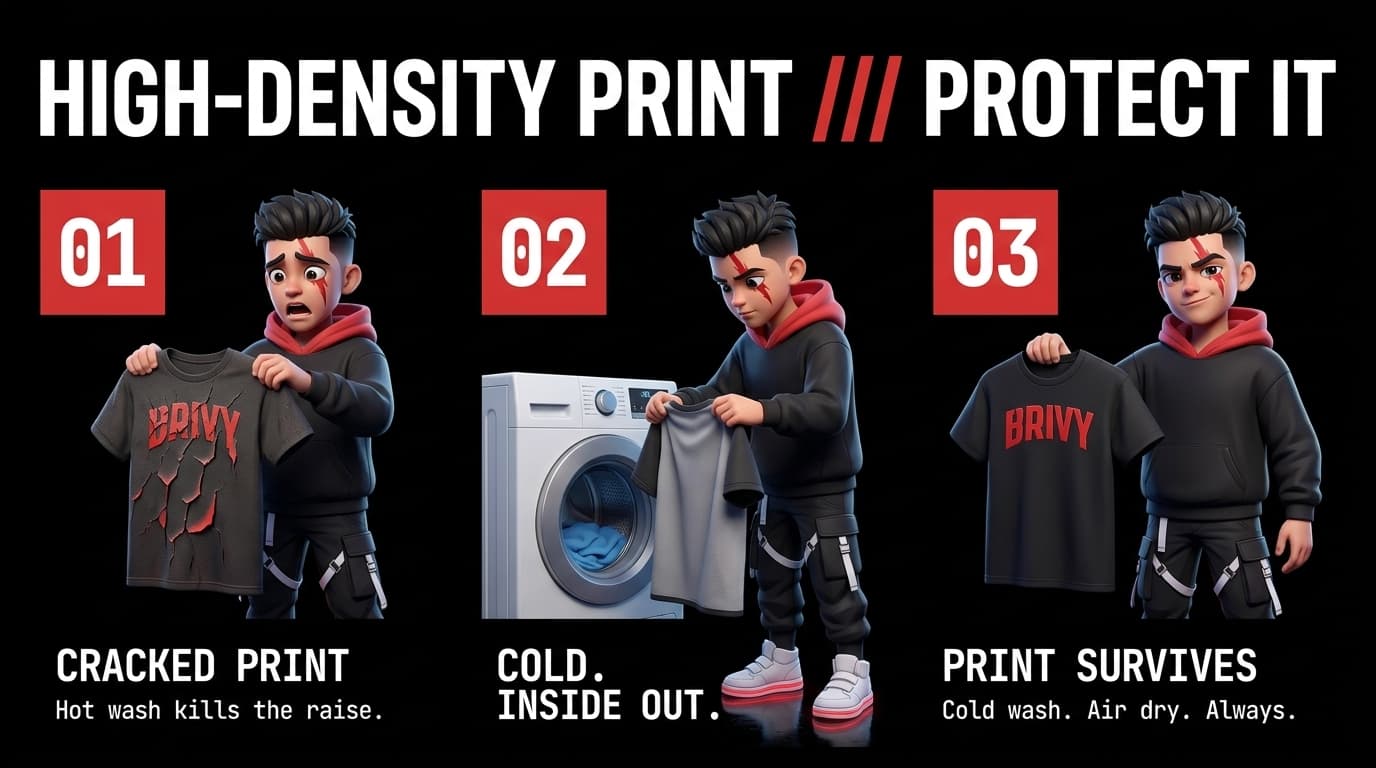
Washing High-Density and Gel Prints: Preventing Peeling, Cracking, and Print Damage
Protecting high-density and gel screen prints in the wash requires avoiding heat, preventing direct friction, and choosing pH-neutral liquid detergents. Because raised prints sit high off the cotton face, standard machine wash cycles can easily peel or crack the graphic lines. Neglecting your high density print wash care routine triggers immediate graphic degradation. By running a clean, developer-level wash care protocol, you can shield these physical print coordinates from drum abrasions and thermal stress, keeping your graphics dimensional and sharp forever.
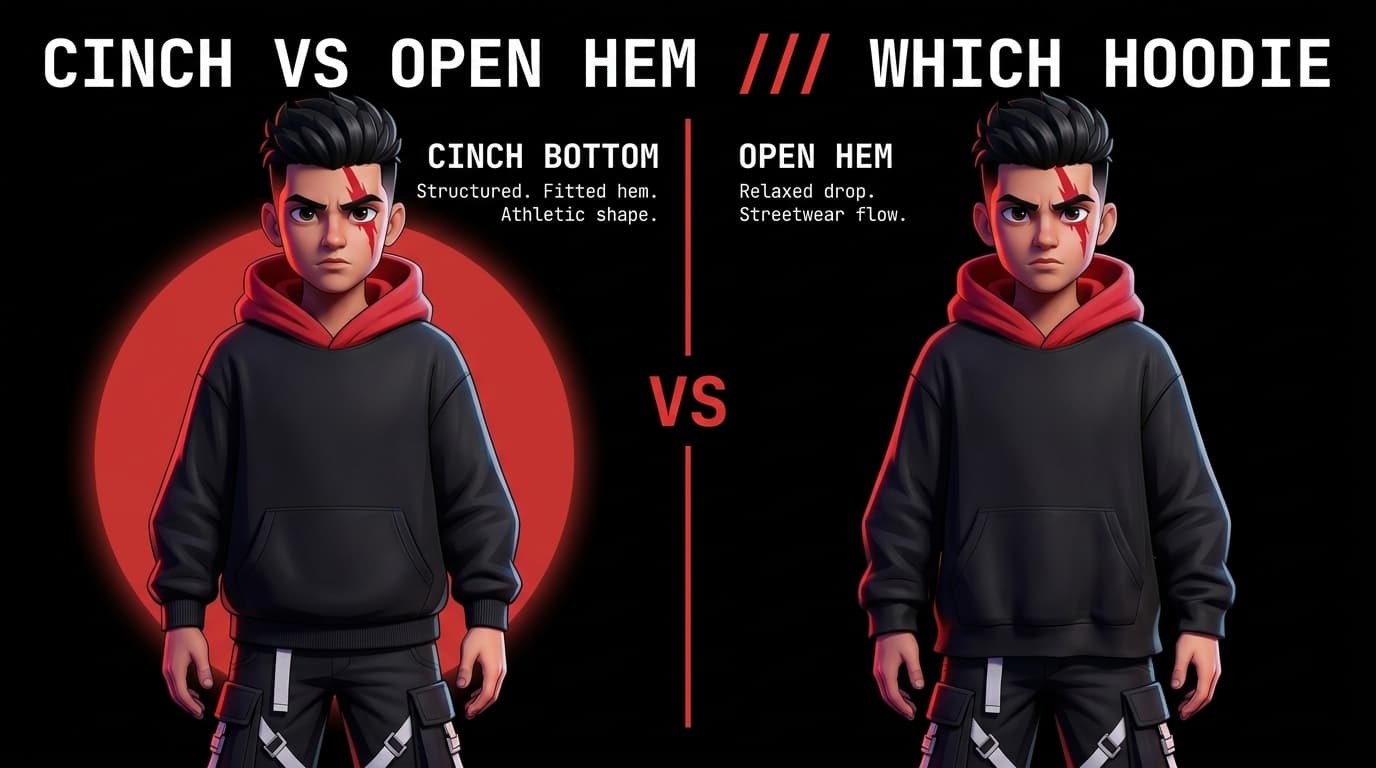
Cinch-Bottom vs Open-Hem Hoodies: Proportions, Layering, and Silhouette Drape
Choosing between a cinch-bottom and open-hem hoodie determines whether your streetwear fit has a cropped, balloon-like torso profile or a relaxed, flowing vertical stack. Cinch-bottom hoodies pull the fabric inward at the waist to highlight your pants pocket line, while open-hem hoodies drape straight down, making them superior for multi-layer fits.
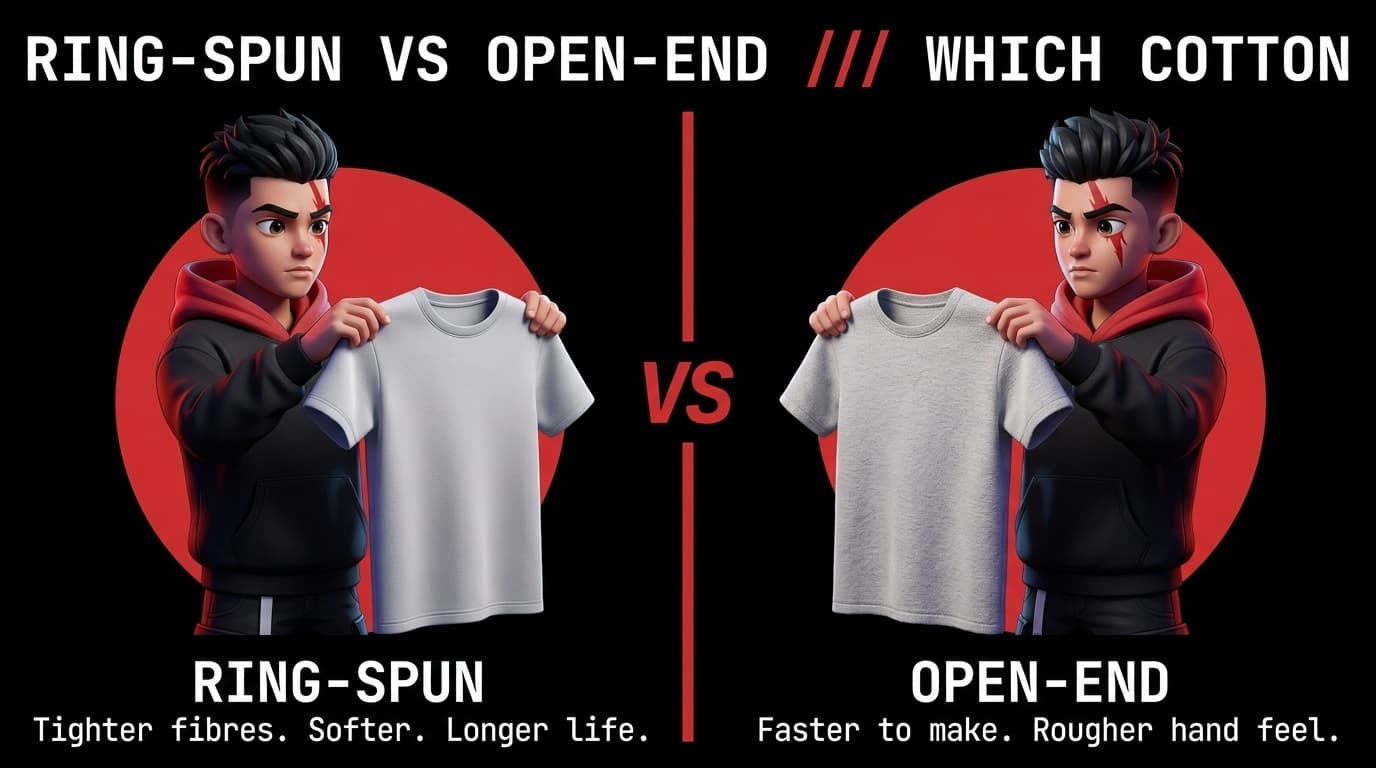
Ring-Spun vs Open-End Cotton: Yarn Spinning Methods and Fabric Longevity
The choice between ring-spun and open-end cotton determines whether your heavyweight t-shirts have a smooth, high-density touch or a dry, textured, vintage feel. Ring-spun cotton uses continuous twisting to produce fine, strong yarns with high print-holding capacity, while open-end cotton is faster to manufacture, producing a coarser, bulkier texture.
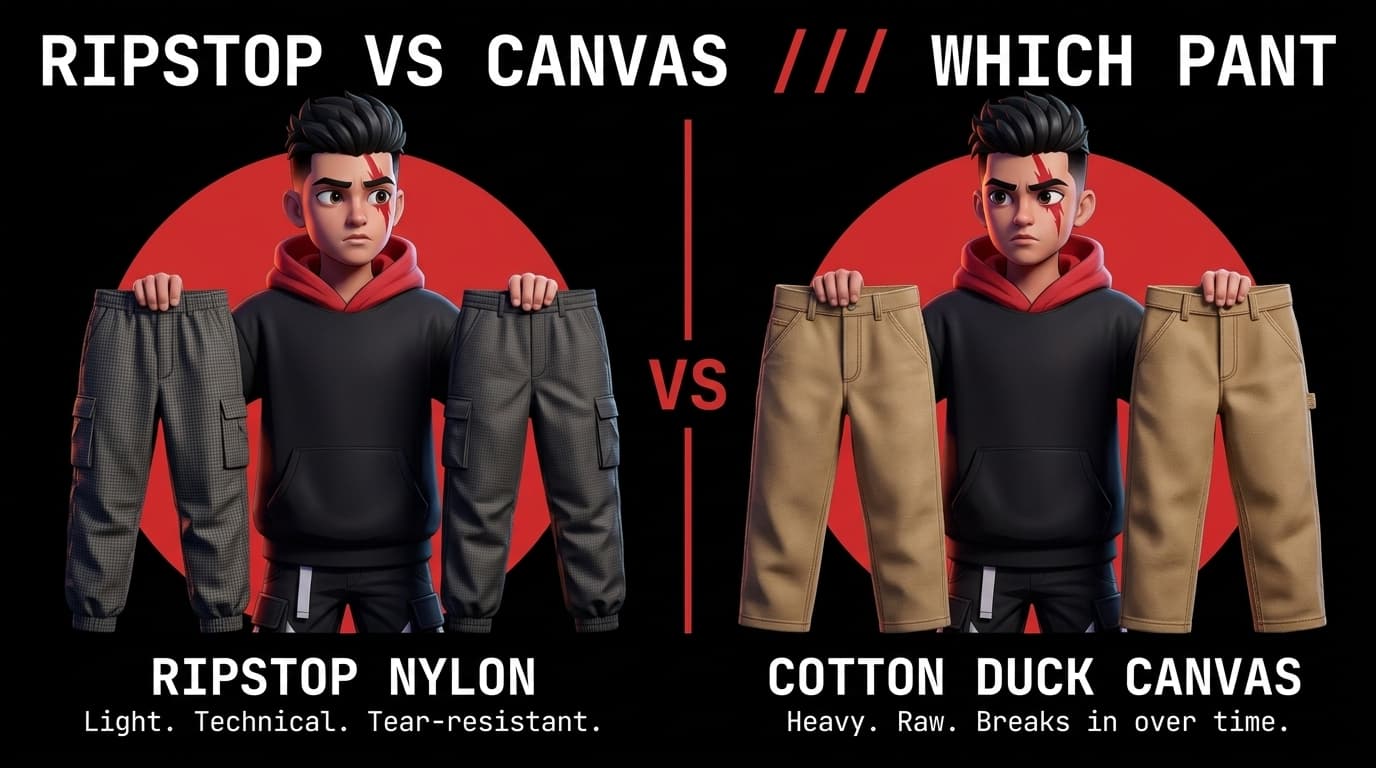
Ripstop Nylon vs Cotton Duck Canvas Cargo Pants: Technical Techwear vs Rugged Workwear
Choosing between ripstop nylon vs cotton canvas pants depends on whether you prioritize ultra-lightweight water resistance or dense, structured durability. Ripstop nylon uses crosshatch reinforcement threads to stop tears on high-ventilation, humid commutes, whereas duck canvas provides a heavy, stiff drape that holds a boxy street silhouette.
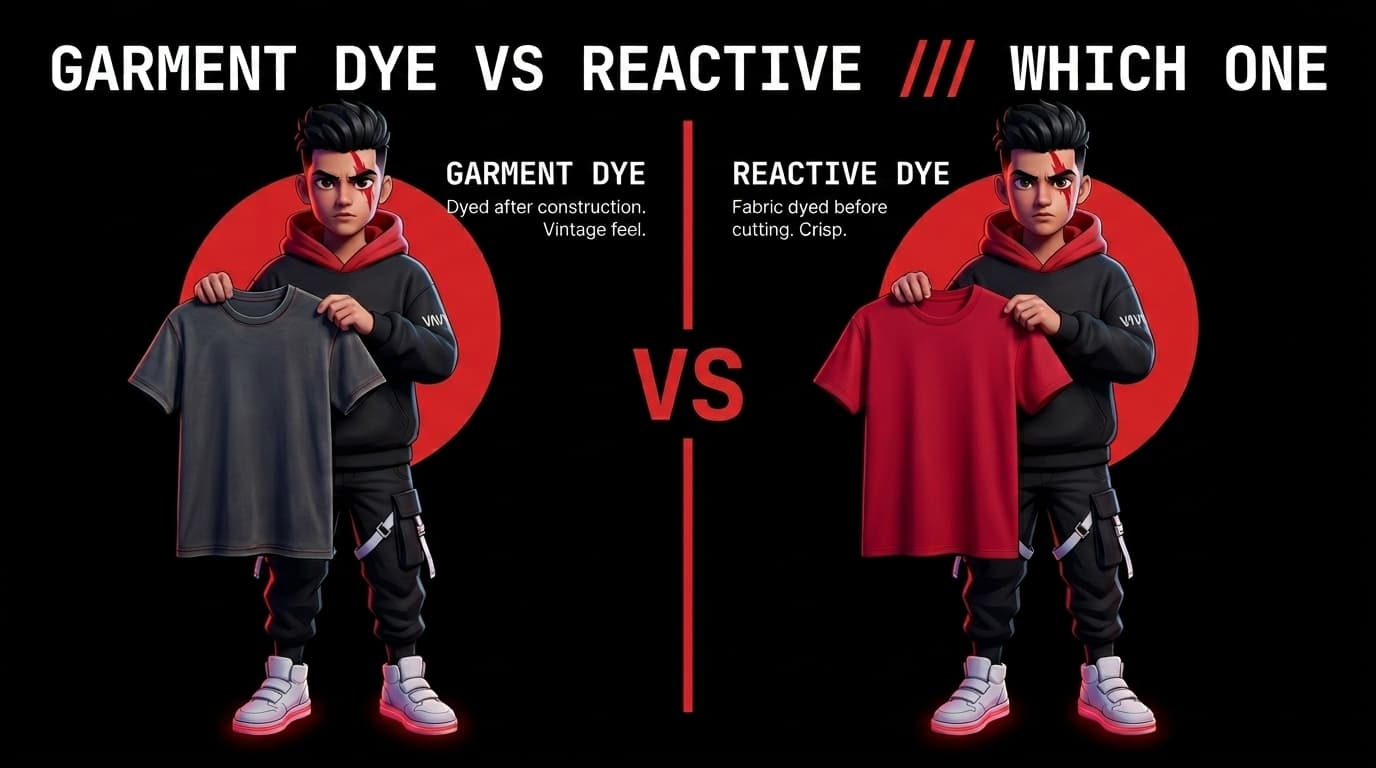
Garment-Dye vs Reactive-Dye: Understanding Vintage Patinas vs Locked Colors
The choice between garment-dyed and reactive-dyed t-shirts determines whether your streetwear has a vintage, faded patina or a locked, uniform color profile. Garment-dyed shirts are dyed after construction to create soft, washed seam highlights, whereas reactive-dyed shirts use pre-dyed yarns to lock in rich, fade-resistant color.
/// VAVVY
Shop Now
Premium Indian streetwear, built for the heat.