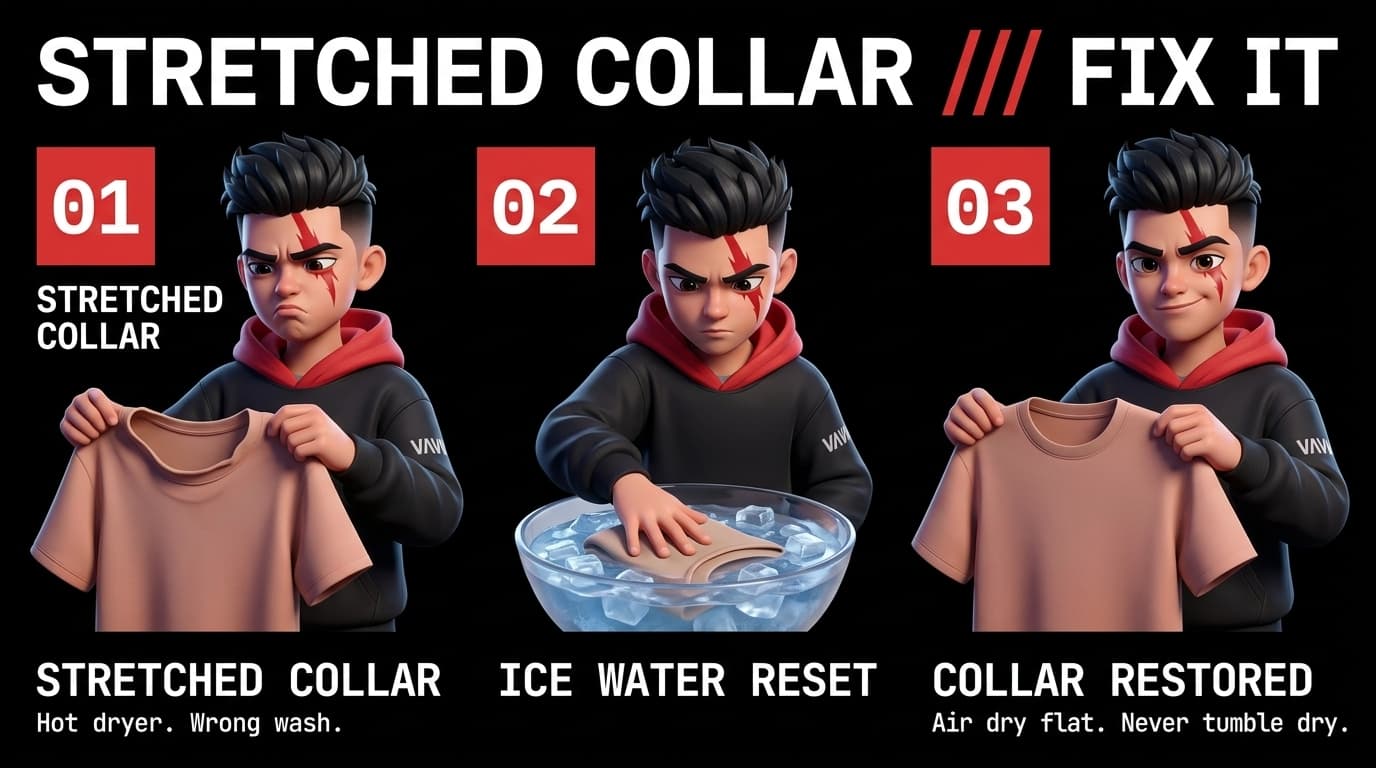
How to Fix a Stretched Crewneck Collar: Restoring Ribbed Neckbands
Restoring a stretched, wavy crewneck collar (often called "bacon collar") requires using heat and moisture to shrink the cotton elastic fibers back into alignment. This is done by dipping the collar in boiling water, shaping it flat, and pressing it with a hot iron to set the ribbing back to its original shape.
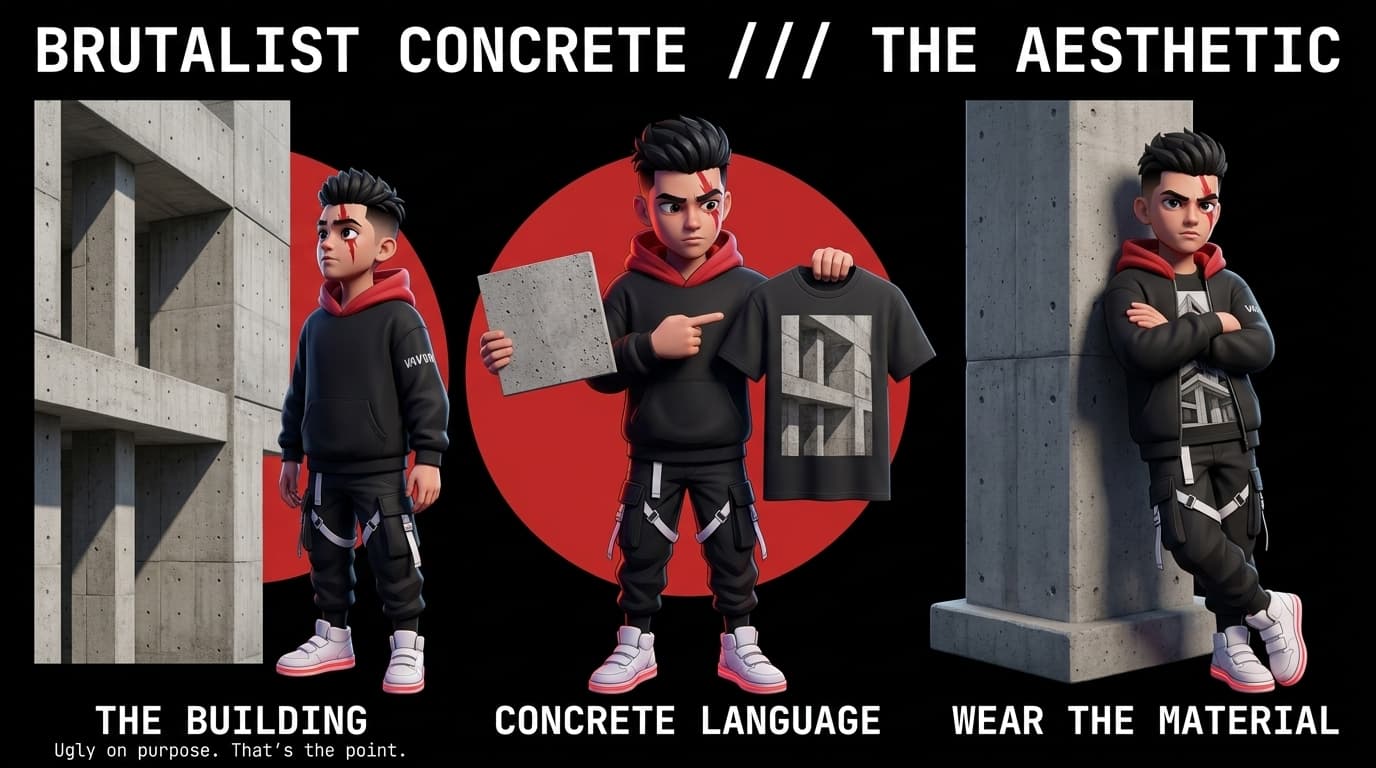
Brutalist Concrete Architecture and Streetwear: Connecting Raw Hems to Grey Pillars
The raw, unpainted concrete pillars and sharp geometric blocks of brutalist metropolitan architecture have directly influenced the raw hems, grey palettes, and boxy fits of modern streetwear. This aesthetic connection treats garments as wearable architectural structures that mirror the rugged, industrial city landscape.
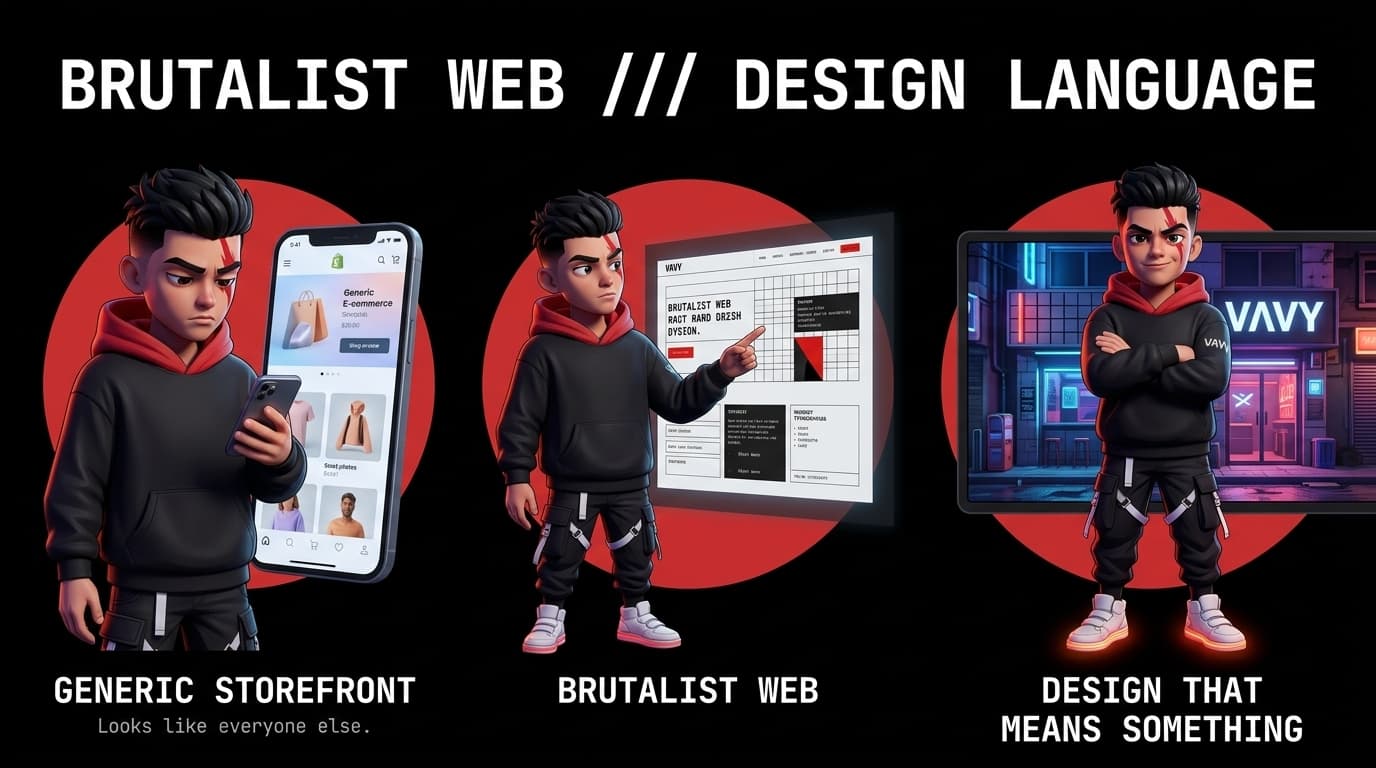
Brutalist Web Storefronts: How Monospace Grids Overtook E-Commerce Design
Brutalist web design in streetwear replaces polished, corporate e-commerce templates with monospace coding grids, raw text directories, and high-contrast layouts. This digital style treats online storefronts as technical terminal blocks, prioritizing subcultural credibility over mainstream retail conventions.
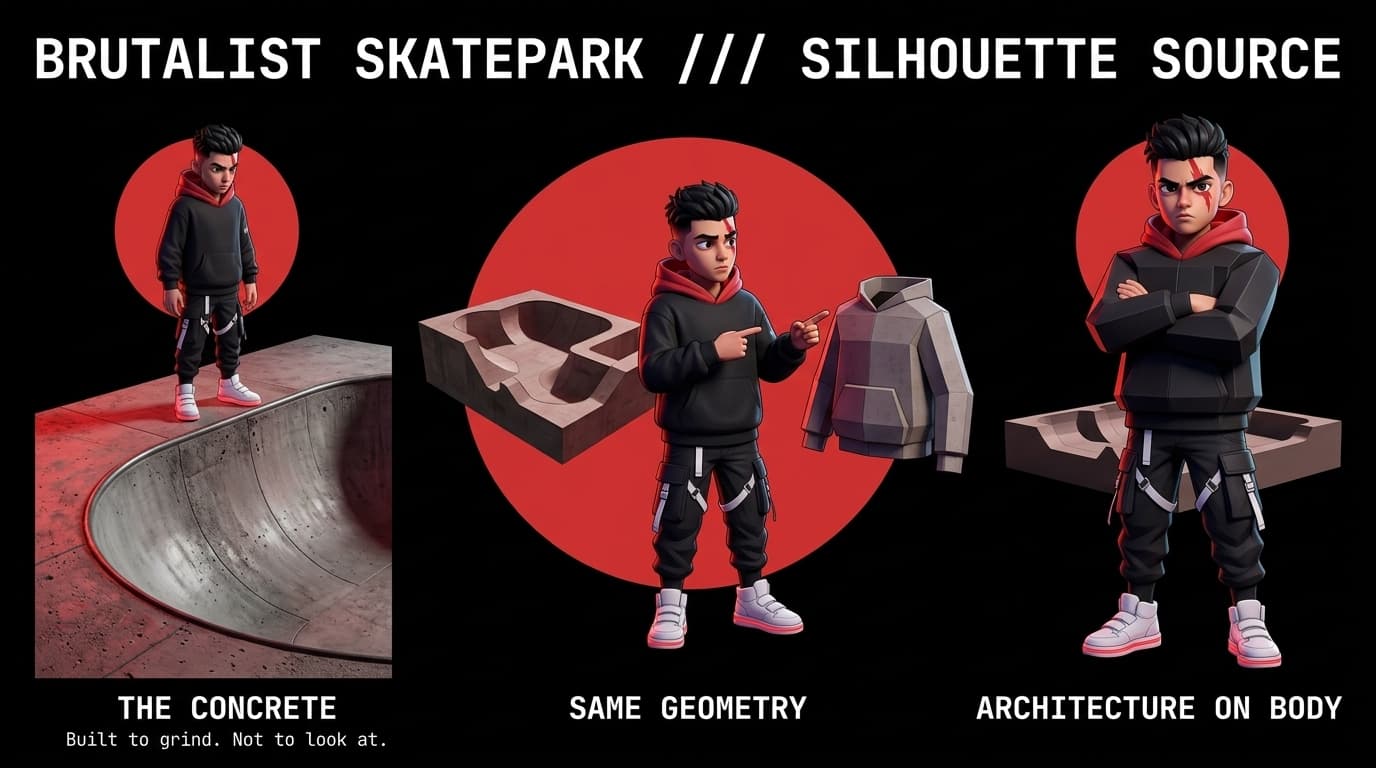
Brutalist Skateparks and Indian Skatewear: Concrete Architecture and Silhouette Influence
The raw concrete shapes of India's growing brutalist skateparks have directly influenced the silhouette and durability needs of modern local streetwear. As skaters adapt to hard concrete transitions in spots like Bangalore and Mumbai, their apparel has shifted toward heavy canvas, wide cuffs, and triple-stitched joints.
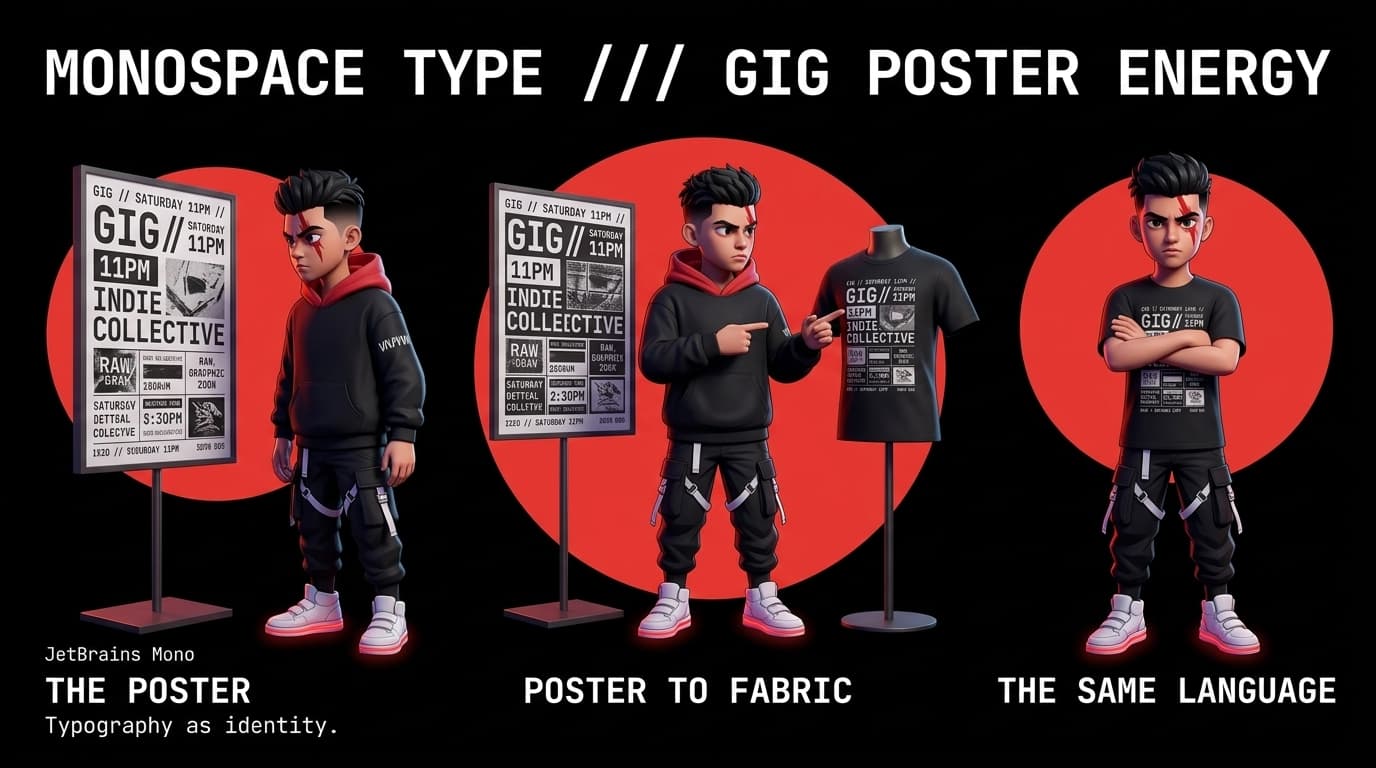
The Rise of Monospace Typography in Streetwear: Brutalist Coding Aesthetics in Print
Monospace typography has transitioned from programmer terminals to become a dominant visual language in brutalist streetwear and Indian indie gig poster designs. By using fixed-width characters and grid-aligned layouts, this aesthetic celebrates digital raw-text grids over polished corporate branding.
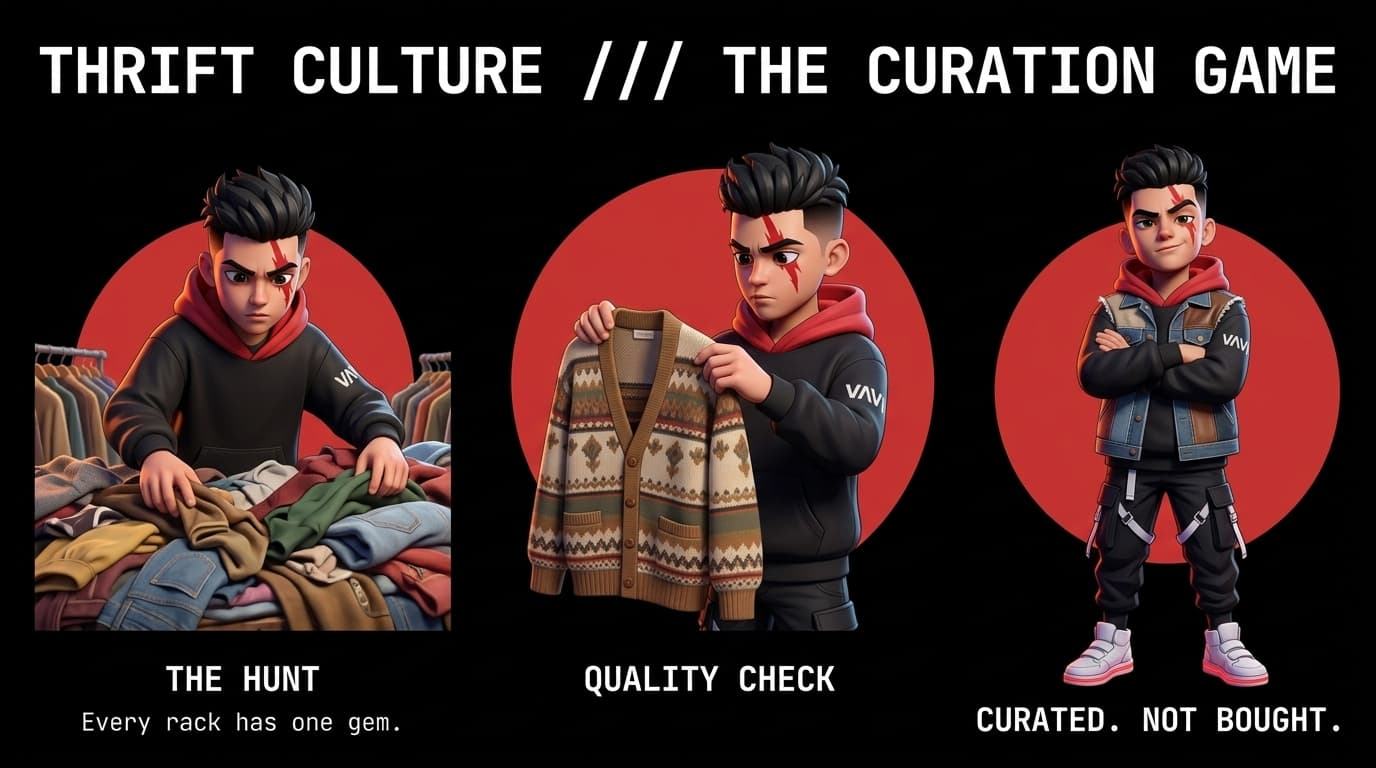
The Indian Thrifting Subculture: Styling Vintage Finds with Premium Heavyweight Apparel
Navigating India's rising thrifting subculture requires mixing vintage, faded second-hand pieces with modern, structured heavyweight streetwear. By combining the unique patina of thrifted graphic tees with the clean, boxy lines of new cargos and hoodies, you build a custom fit that stands out in urban metros.
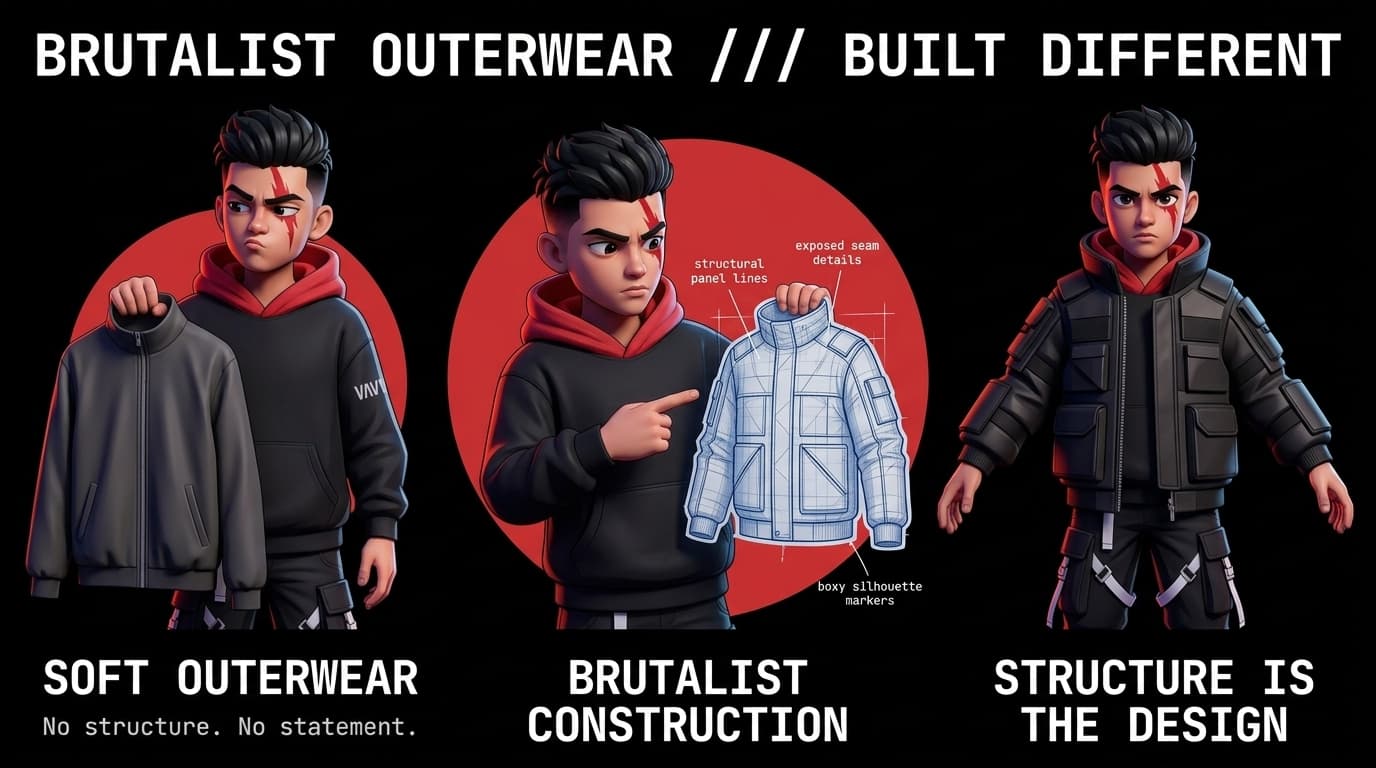
Brutalist Geometry in Outerwear: Structural Panels, Stiff Seams, and Unbuttoned Silhouettes
Implementing brutalist streetwear outerwear design means rejecting curved, soft lines in favor of sharp structural panels, stiff reinforced seams, and boxy, unbuttoned silhouettes. By highlighting raw garment architecture and dense canvas fabrics, these designs treat jackets as physical structures rather than simple layers.
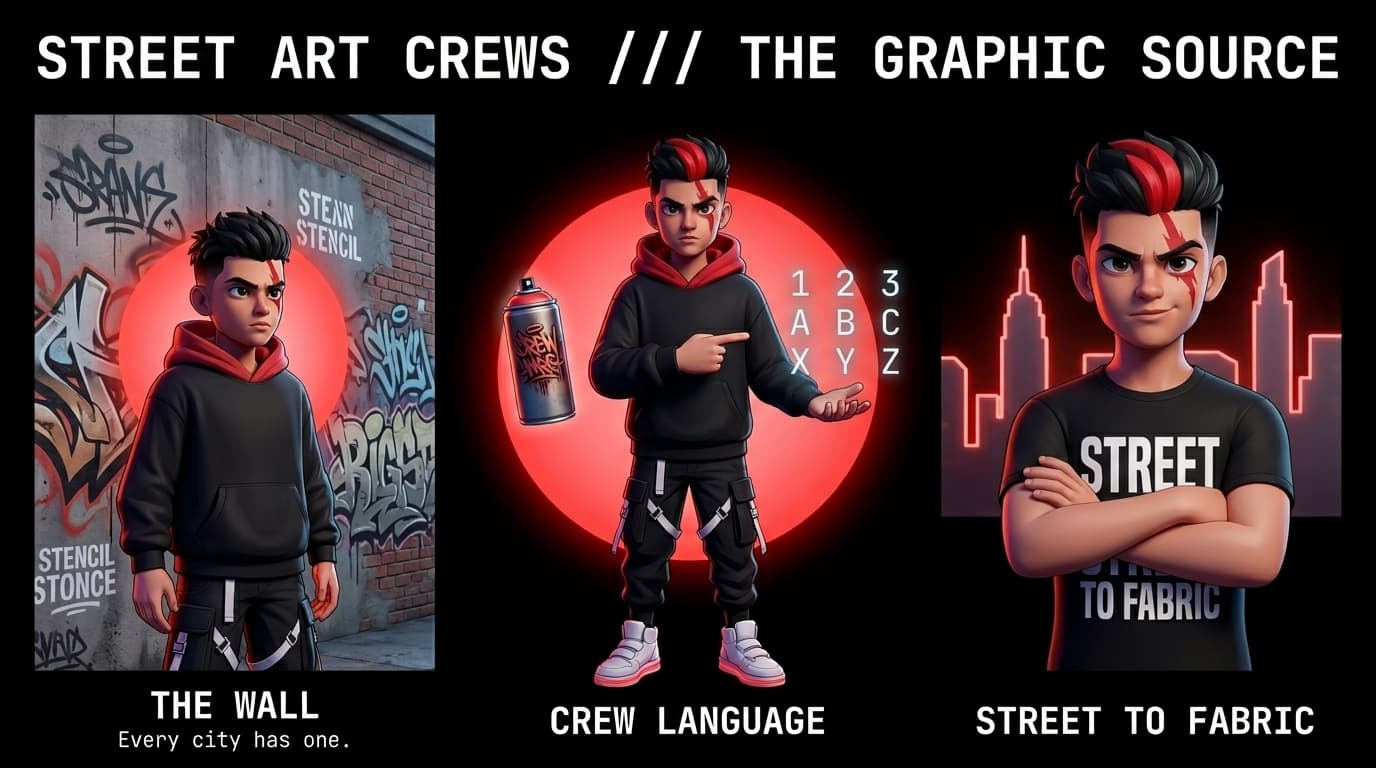
The Evolution of Indian Street Art Crews: Fusing Graffiti with Tech-Grid Typography
The growth of Indian street art crews is actively merging classic graffiti tagging with tech-grid typography, transforming public walls and local streetwear designs. Fusing raw spray aesthetics with monospace grids, these crews treat cities as both a gallery and an architectural blueprint. As independent designers reject polished commercial graphics in favor of raw structural aesthetics, the influence of local tagging culture has emerged as a major driving force in contemporary urban fashion. By looking directly at the concrete walls, underpasses, and abandoned train yards of major Indian metro cities, the intersection between indian street art crews streetwear and technical layout design has catalyzed a massive shift toward material honesty and raw construction.
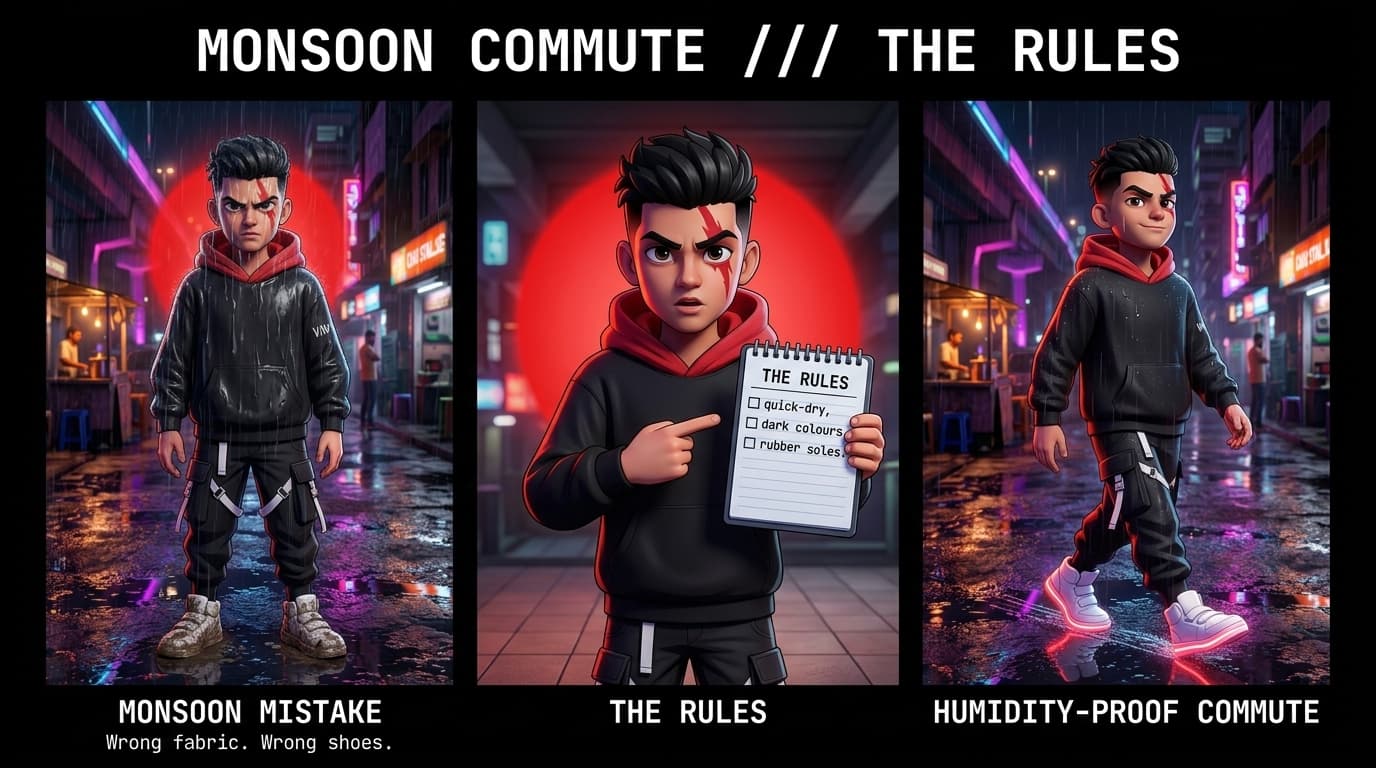
9 Streetwear Styling Rules for Monsoon Commutes in High-Humidity Metros
Applying smart streetwear styling rules for monsoon commutes in high-humidity metros is essential to marry puddle-proof utility with structural aesthetic volume. By pairing cinch-cuff Twill cargos, treated synthetic leather footwear, and packable water-resistant technical windbreakers, you can easily maintain a clean street drape in wet coastal humidity.
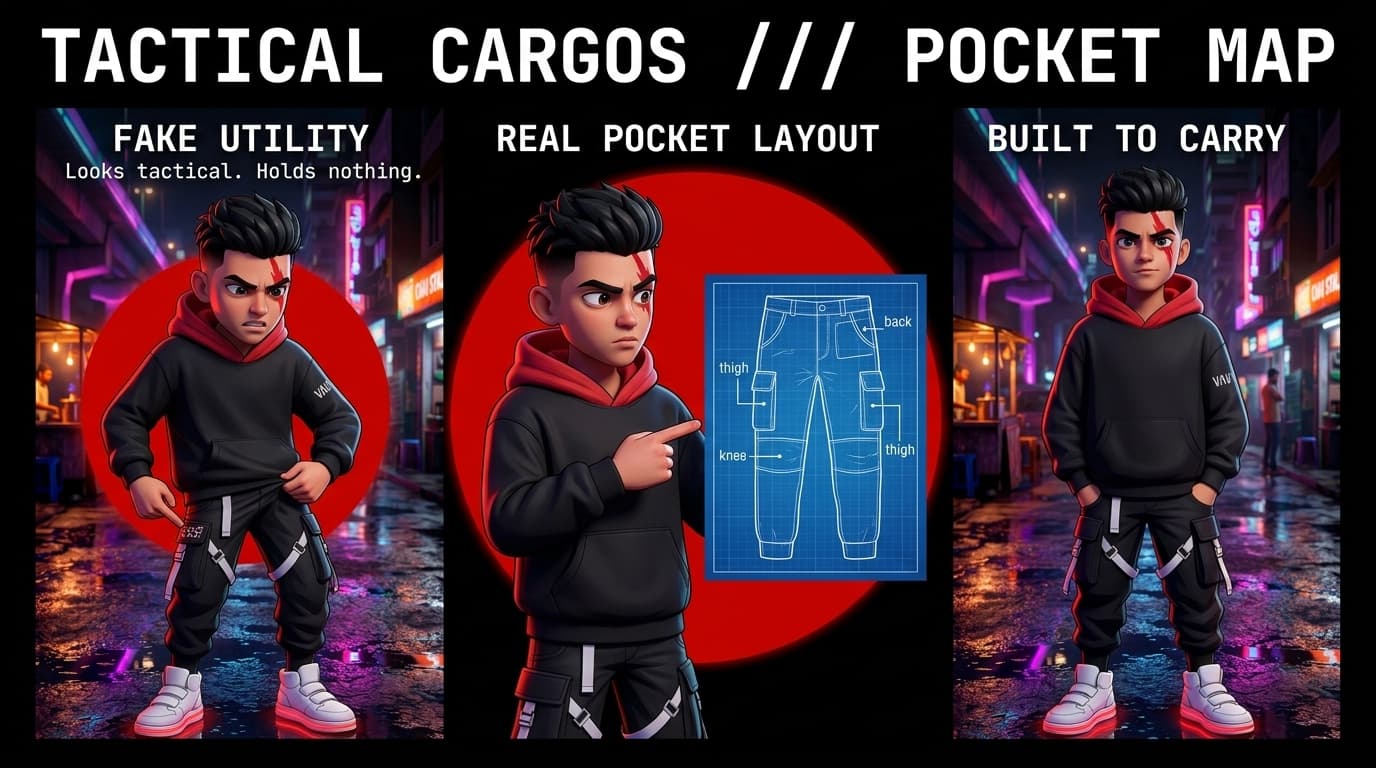
4 Pocket Layout Guidelines for Brutalist Tactical Cargos
Standard pocket layout guidelines for brutalist tactical cargos reject traditional symmetrical pockets to optimize for geometric alignment, flat-laying profiles, and asymmetric visual weight. By placing structured utility pocket boxes, tactical webbing loops, and angled zip systems in calculated alignments, these designs treat pants as architectural panels.
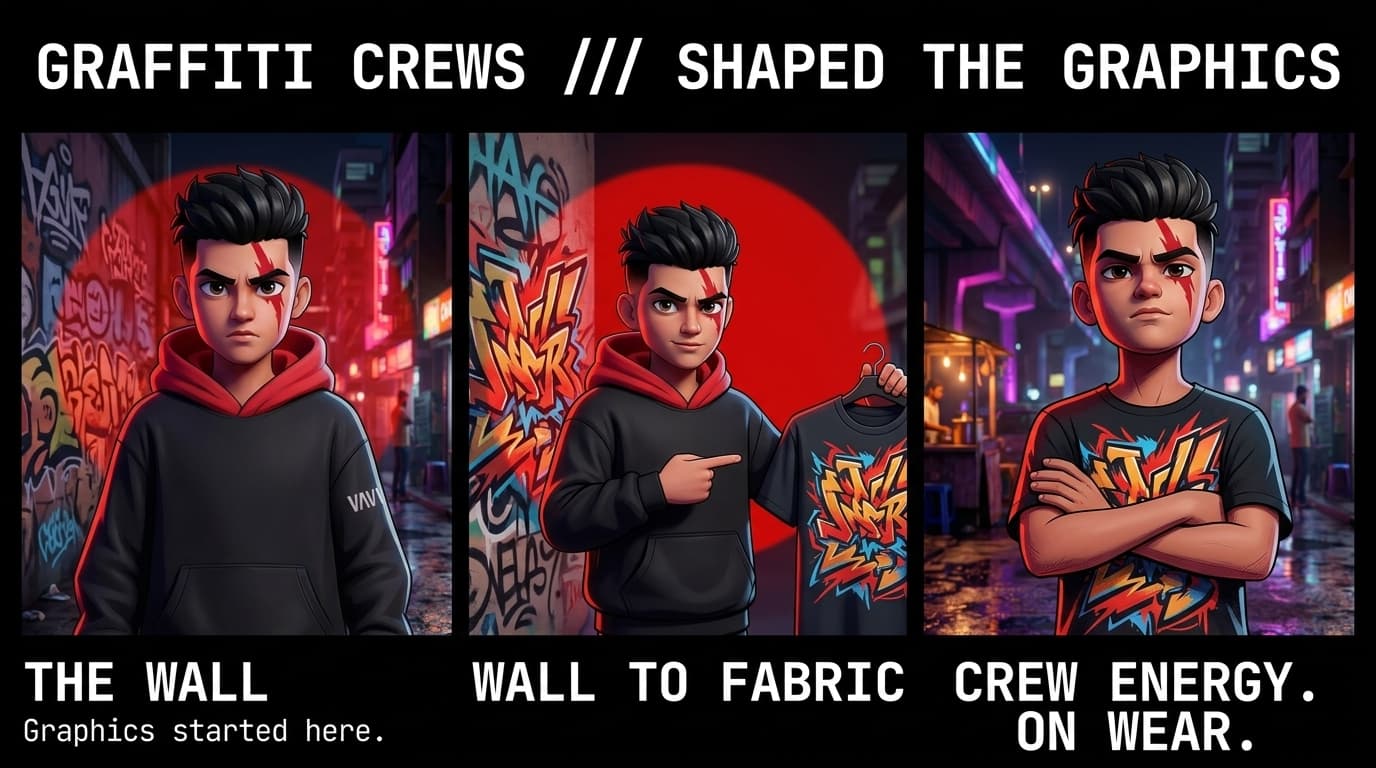
3 Indian Graffiti Crews Redefining Brutalist Streetwear Graphics
The rise of regional Indian graffiti crews is actively redefining the visual language, raw textures, and graphic placements of domestic streetwear designs. Fusing underground street-tagging grids with post-industrial monospace coordinates, these crews treat the street as both a canvas and a styling blueprint. As independent designers reject polished commercial graphics in favor of raw structural aesthetics, the influence of local tagging culture has emerged as a major driving force in contemporary urban fashion. By looking directly at the concrete walls, underpasses, and abandoned train yards of major Indian metro cities, the intersection between indian graffiti crews streetwear and technical layout design has catalyzed a massive shift toward material honesty and raw construction.
/// VAVVY
Shop Now
Premium Indian streetwear, built for the heat.