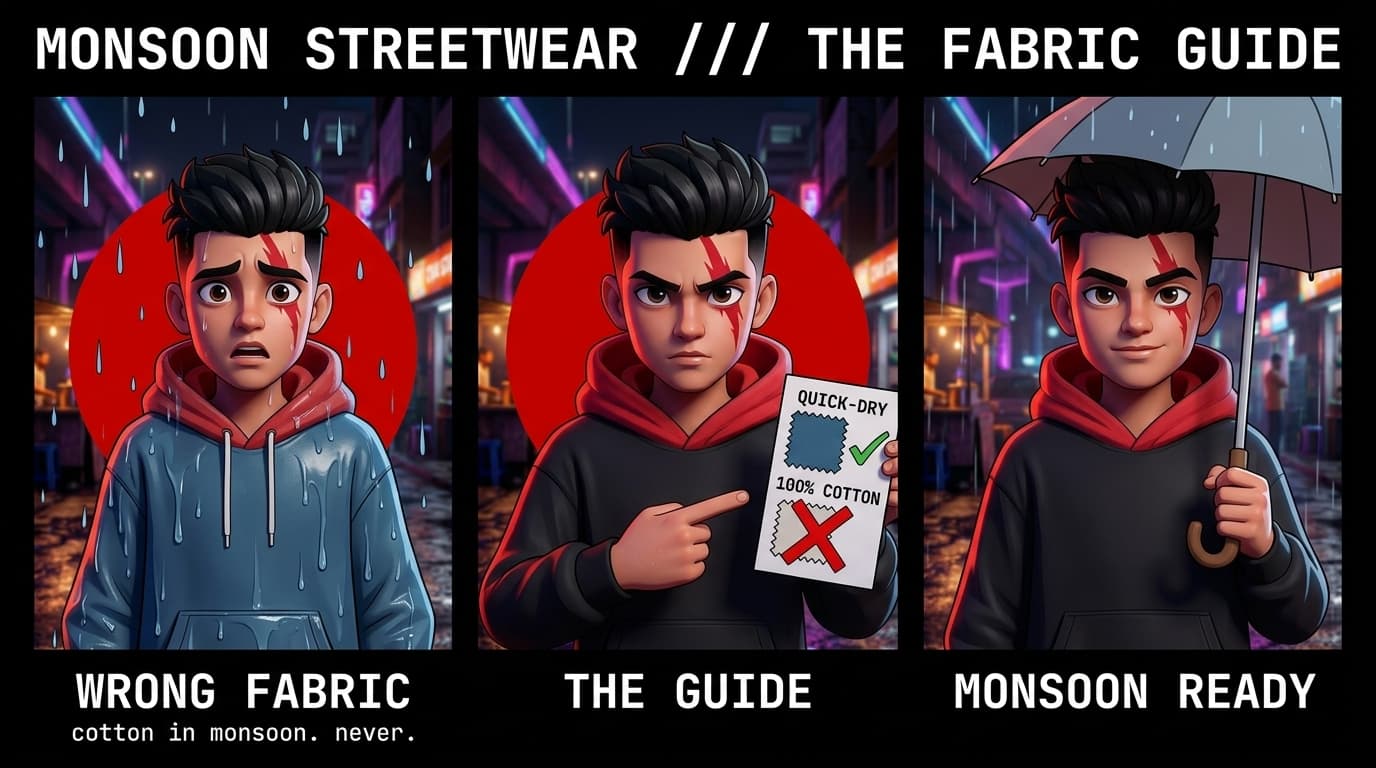
Streetwear for Indian Monsoon: What Fabrics Actually Work in the Rain and Humidity
The Indian monsoon is a three-month structural challenge for streetwear — cotton gets heavy and sodden, synthetics feel like a humid greenhouse against your skin, and anything light enough to breathe usually soaks through in seconds. Here is the honest fabric breakdown you need to stay dry, comfortable, and styled from June to September.
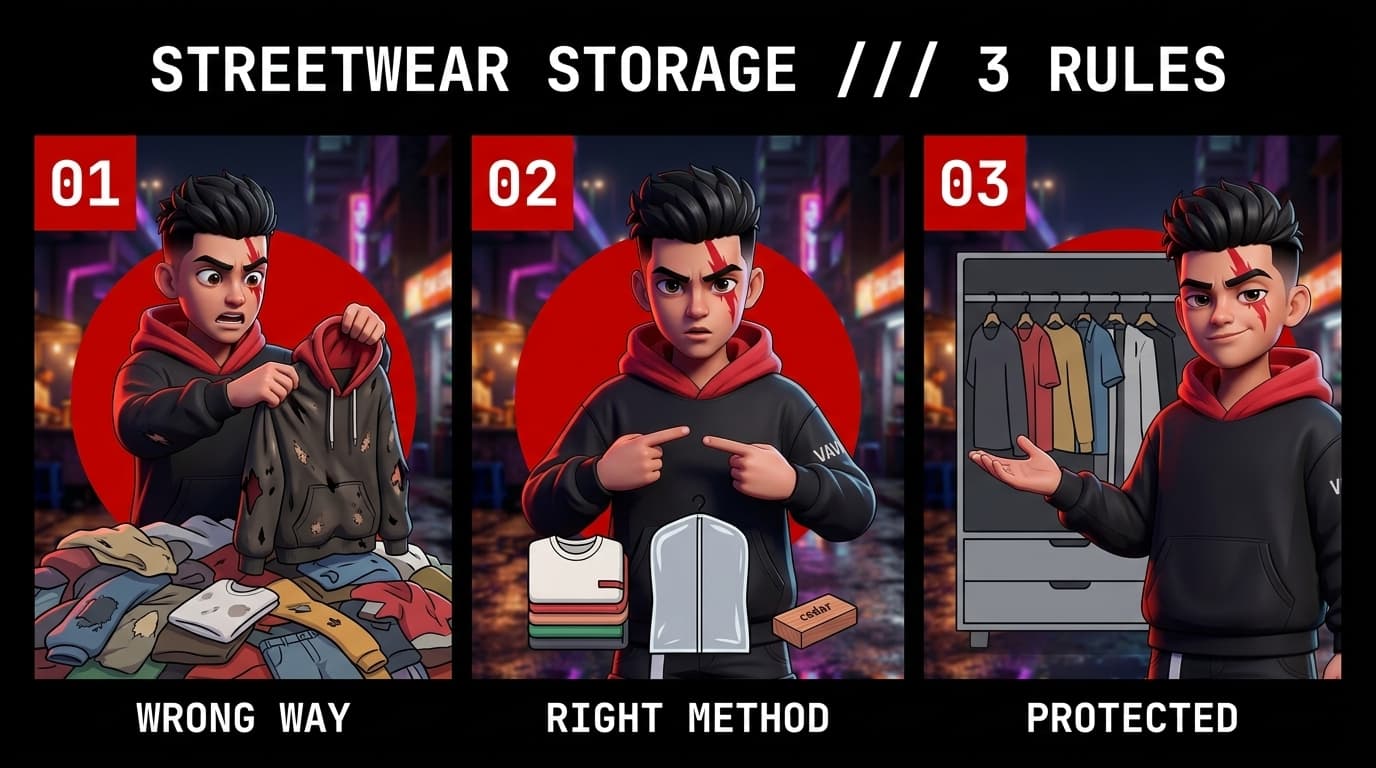
How to Store Streetwear Long-Term Without Ruining It — 8 Rules
Indian humidity, dust, and moth activity make long-term streetwear storage a real problem — and most people don't think about it until a favourite piece is yellowed, stretched, or eaten through. These 8 rules prevent all of it.
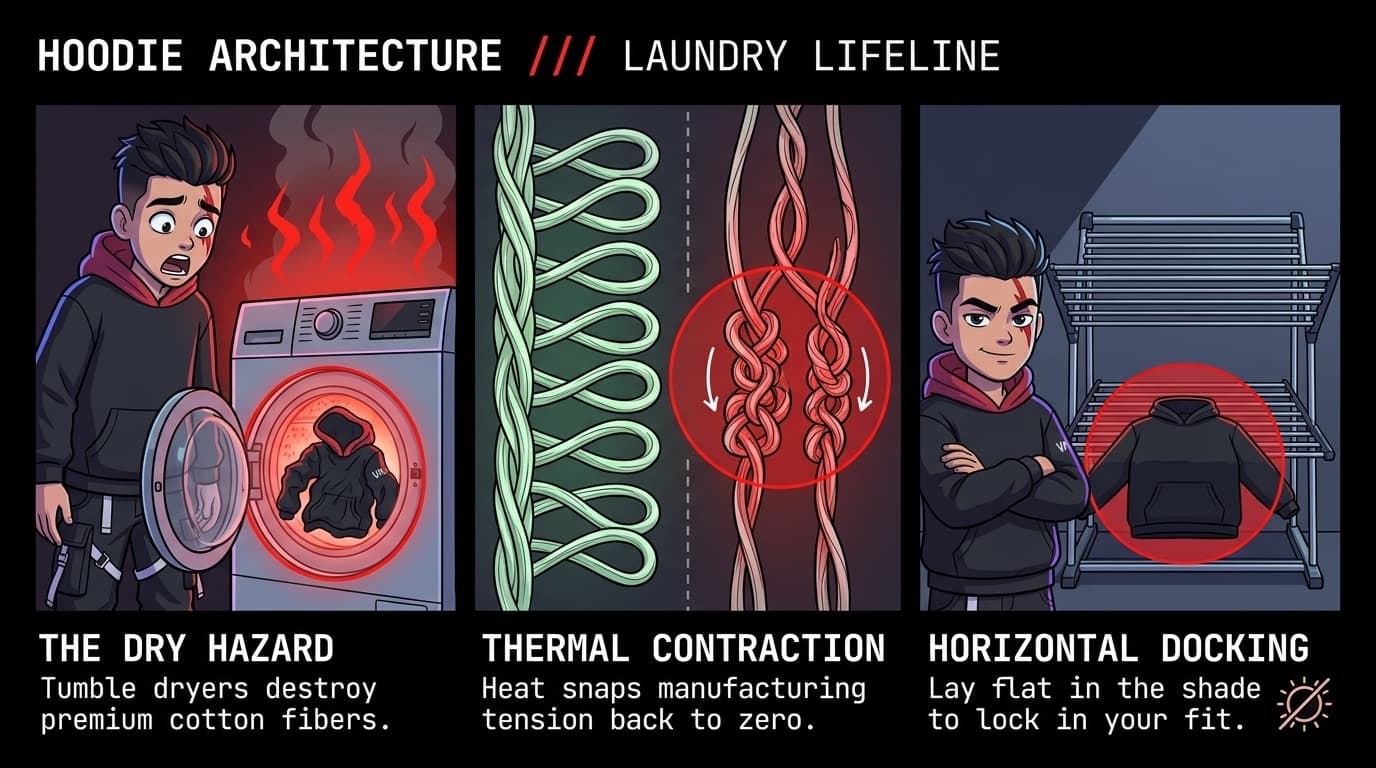
Why Your Hoodie Shrinks — And 6 Ways to Stop It From Happening
You invest hard-earned money into a premium, dense 400 GSM hoodie. It fits perfectly. Then you wash it, and the sleeves have retracted past your wrists. Your garment didn't change size by accident — it reacted to thermal and physical violence.
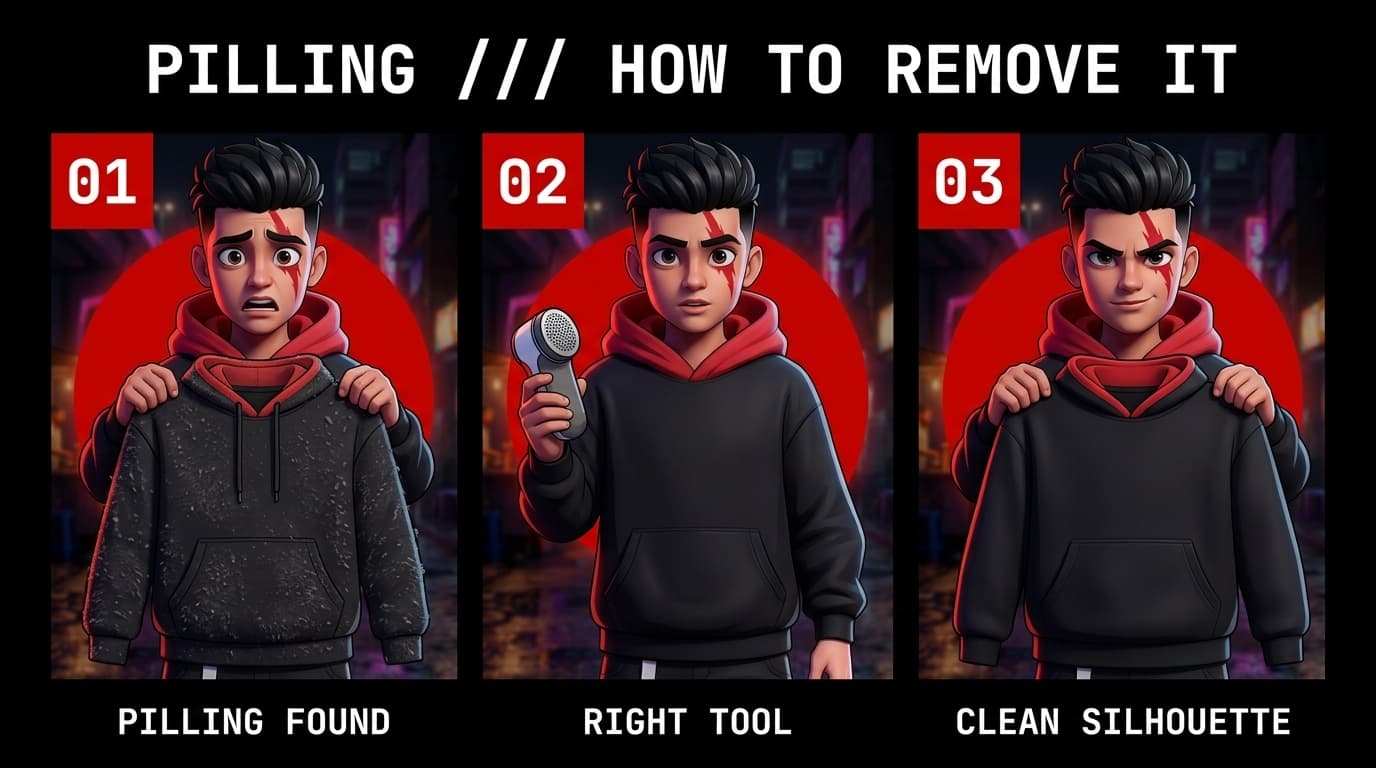
How to Remove Pilling From Cotton Hoodies Without Damaging the Fabric
You pull your favorite heavy-knit cotton hoodie out of the closet and find the underarms and kangaroo pockets coated in tiny lint balls. Pilling is the ultimate enemy of a clean street silhouette. Removing it without destroying the fabric requires the right tools and a calculated technique.
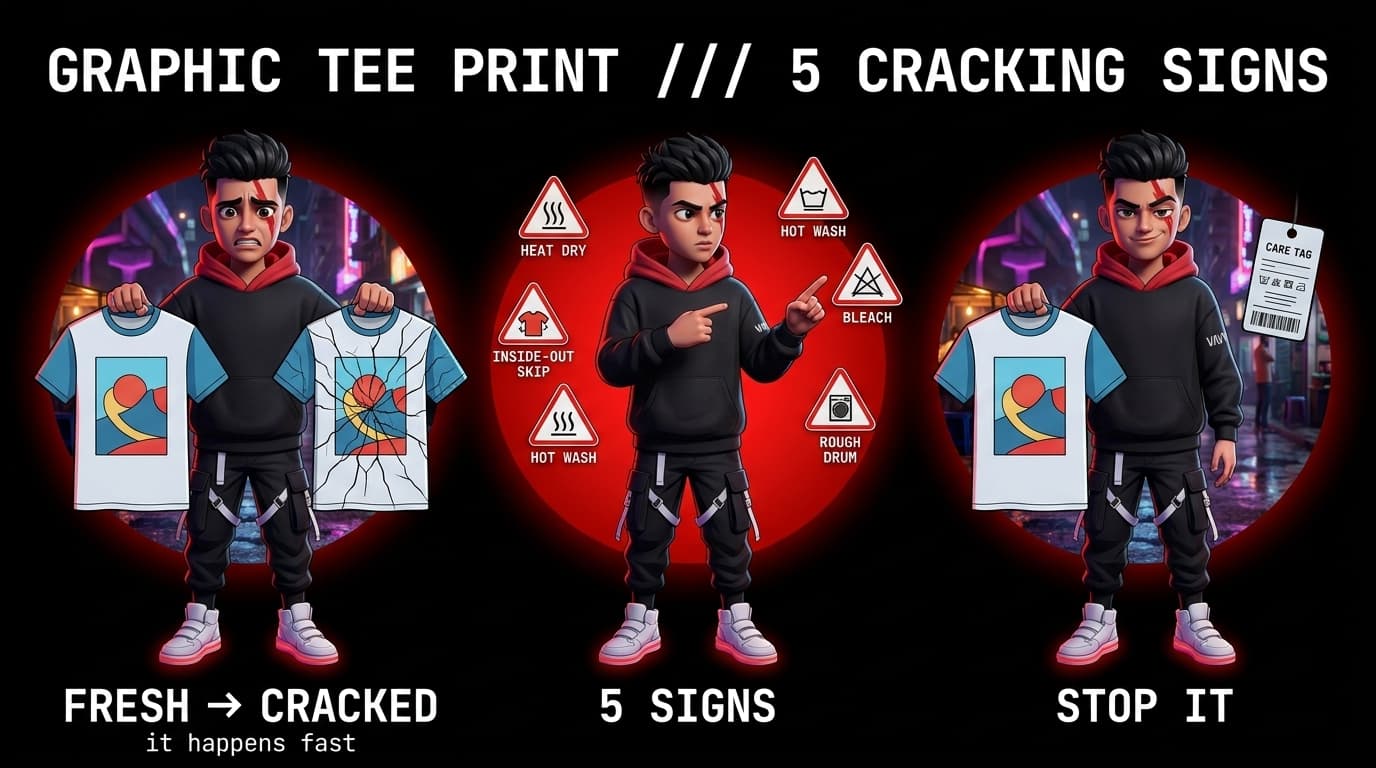
5 Signs Your Graphic Tee Print Is About to Crack (And How to Stop It)
You spend weeks hunting down the perfect graphic tee, wear it twice, throw it through a standard wash cycle, and suddenly the graphics look like a dry riverbed. Cracking is the ultimate vibe killer for premium streetwear — but if you catch the decay early, you can stop it.
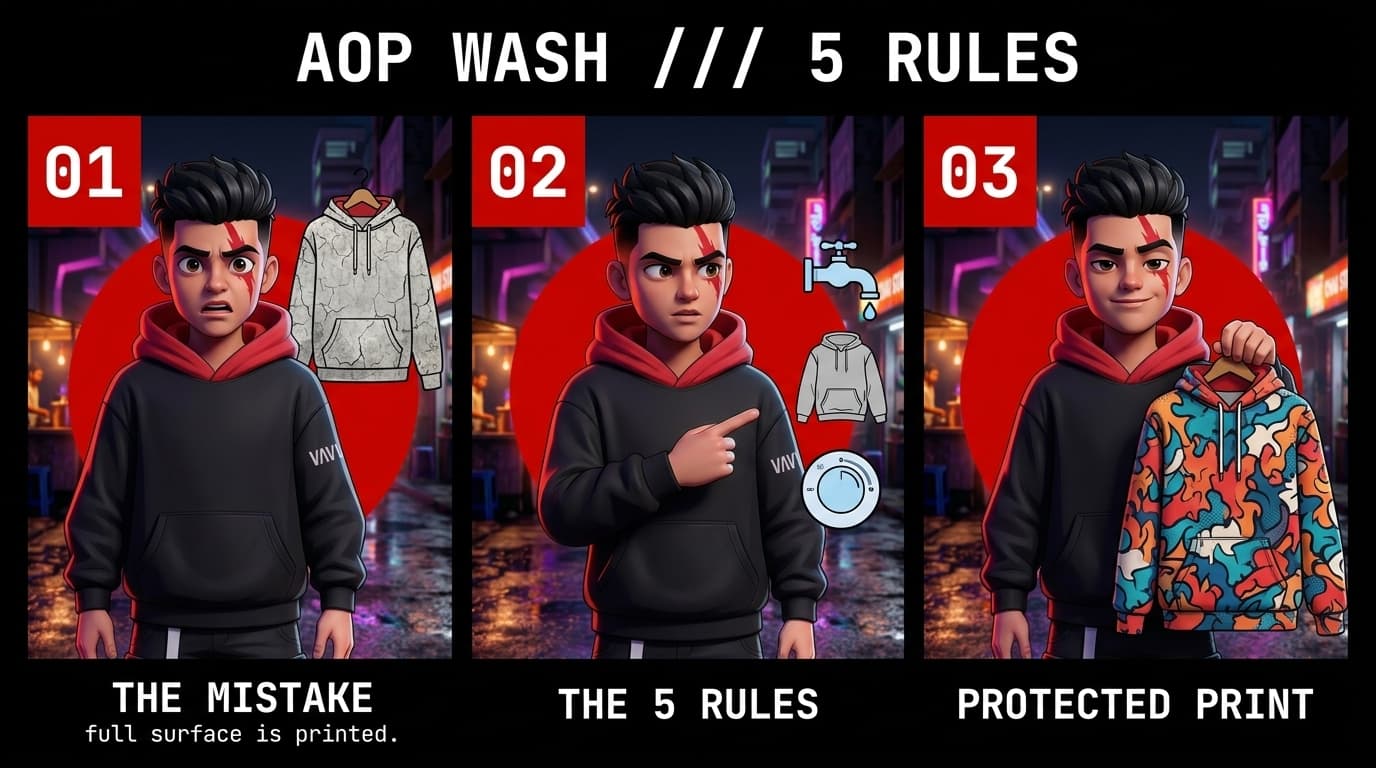
5 Rules for Washing AOP Hoodies Without Ruining the Print
AOP hoodies need different wash rules from regular printed hoodies. The print covers the entire fabric surface — every part of the garment that touches the machine drum during a wash cycle is printed surface.
Bio-Wash Cotton vs Regular Cotton: What the Finish Actually Does
Bio-wash is a finish, not a fabric upgrade. Cellulase enzymes remove the protruding fibre tips that cause roughness and pilling — but it is the same base cotton underneath. Here is when the premium is actually worth paying.
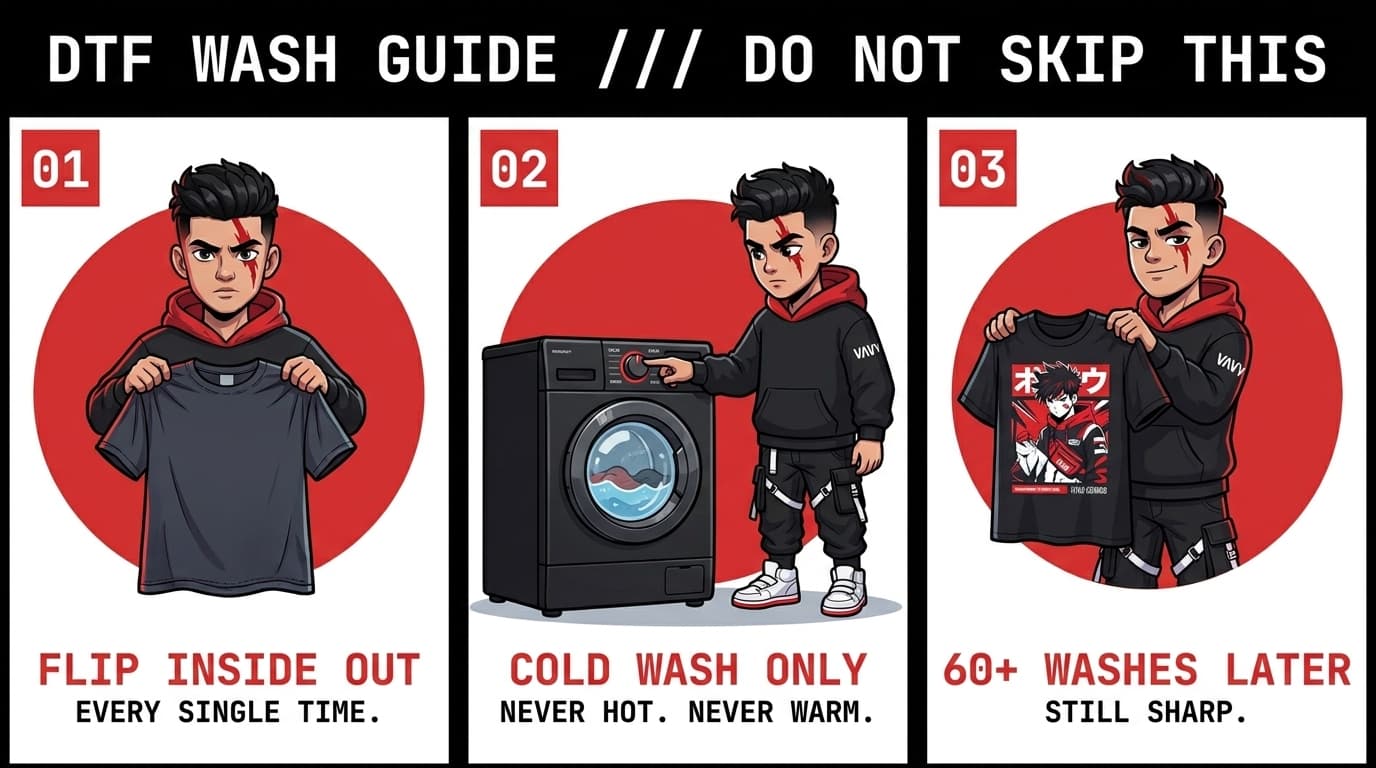
How to Wash DTF Printed Clothing Without Ruining the Print
Most DTF prints don't fail because of the print — they fail because of the wash. Cold water, inside out, air dry: the three-step playbook that keeps a graphic tee looking right for 60+ washes.
Why Your Hoodie Pills After 3 Washes (And How to Stop It Forever)
Vee explains exactly why those tiny fuzz balls appear on your hoodie and the simple fabric and wash choices that make them disappear permanently.
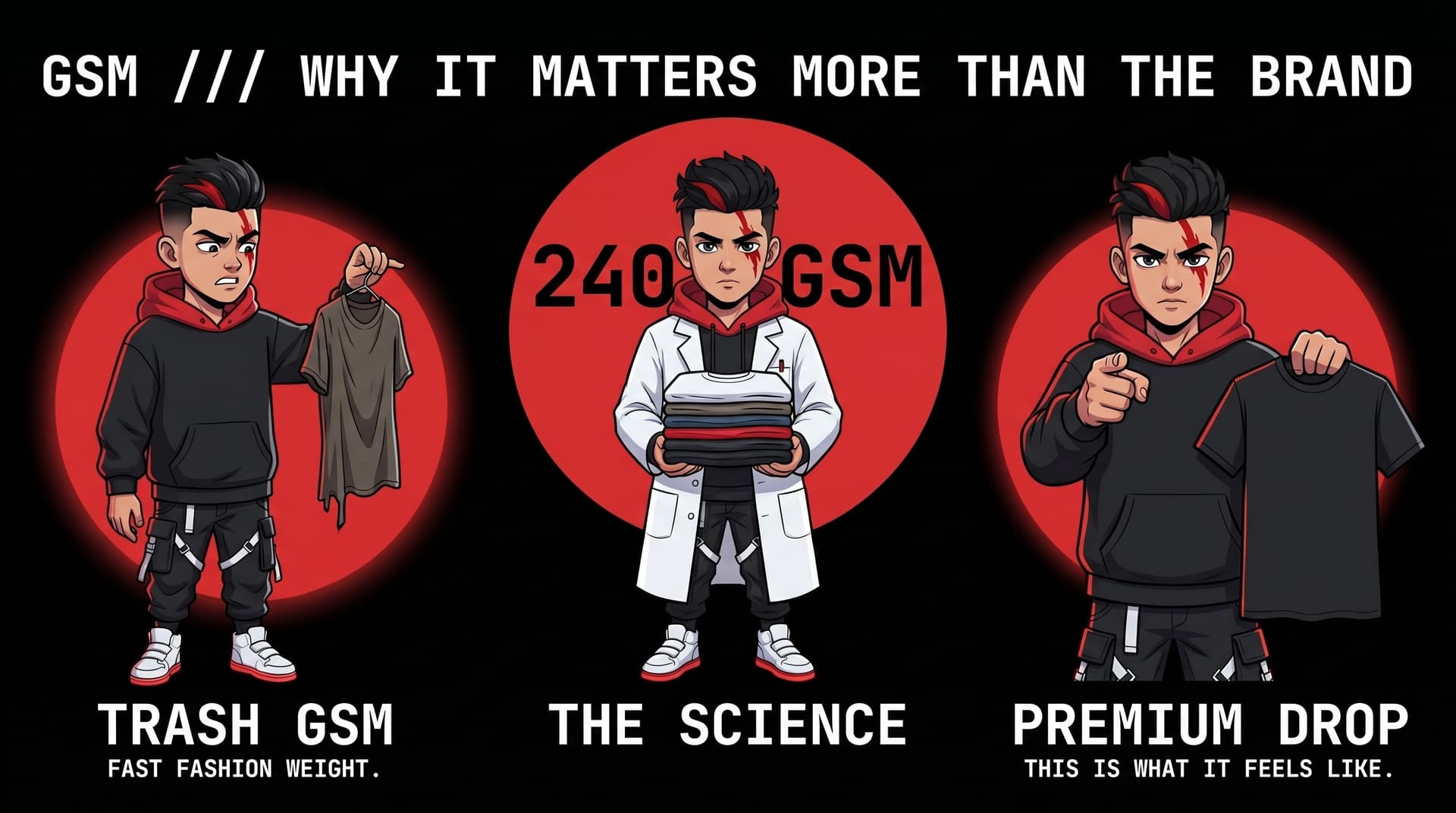
What Is GSM in T-Shirts? Why It Matters More Than the Brand Name
GSM tells you exactly what a t-shirt is made of — and it tells you more than any brand name ever will. Vee breaks down every GSM range so you never buy wrong again.
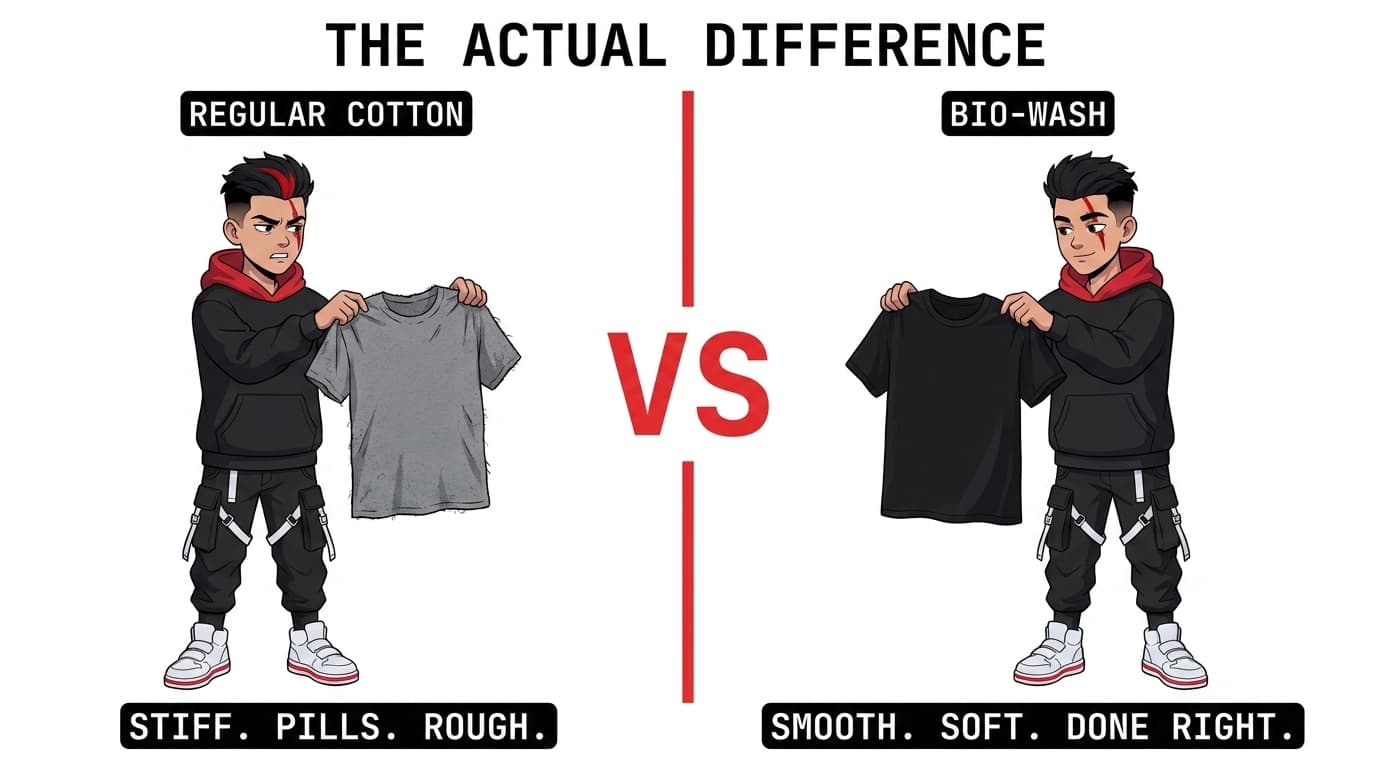
Bio-Wash vs Regular Cotton: What Is the Actual Difference?
Bio-wash is a finishing process, not a fabric type. Vee explains what it actually does to your cotton, why it feels different from day one, and whether it is worth paying more for.
/// VAVVY
Shop Now
Premium Indian streetwear, built for the heat.